
Our first experience snorkeling Turneffe Atoll in Belize was in 2026. On our first trip to Belize in 2008 we did not visit Turneffe. While a lot has changed underwater in 18 years, we found it more alive than we expected. That is not to say that the effects of warm water bleaching events, ocean acidification, and the spread of coral diseases was not obvious, because it was.
What We Saw While Snorkeling Turneffe Atoll
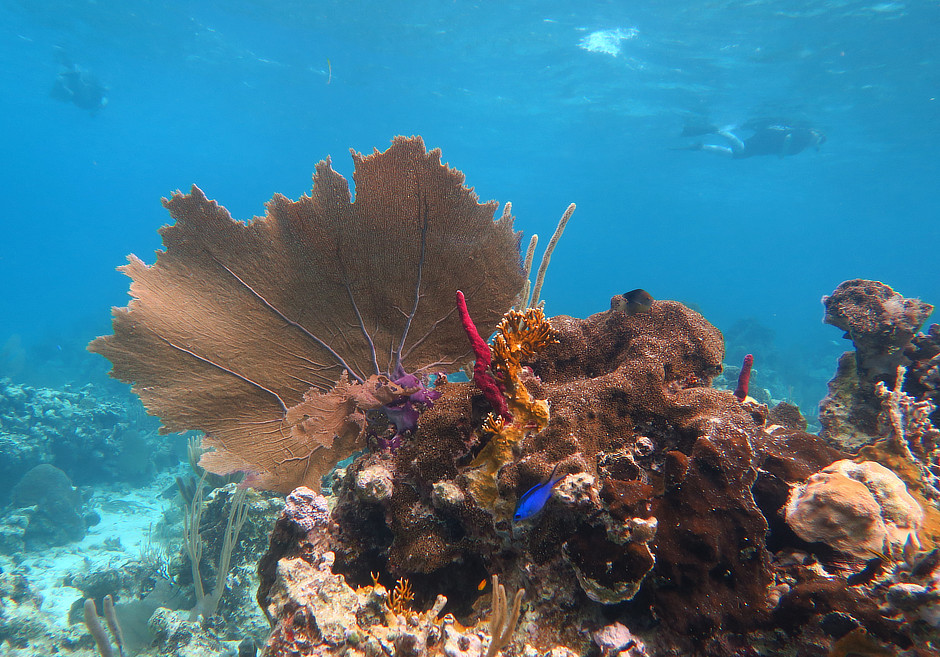
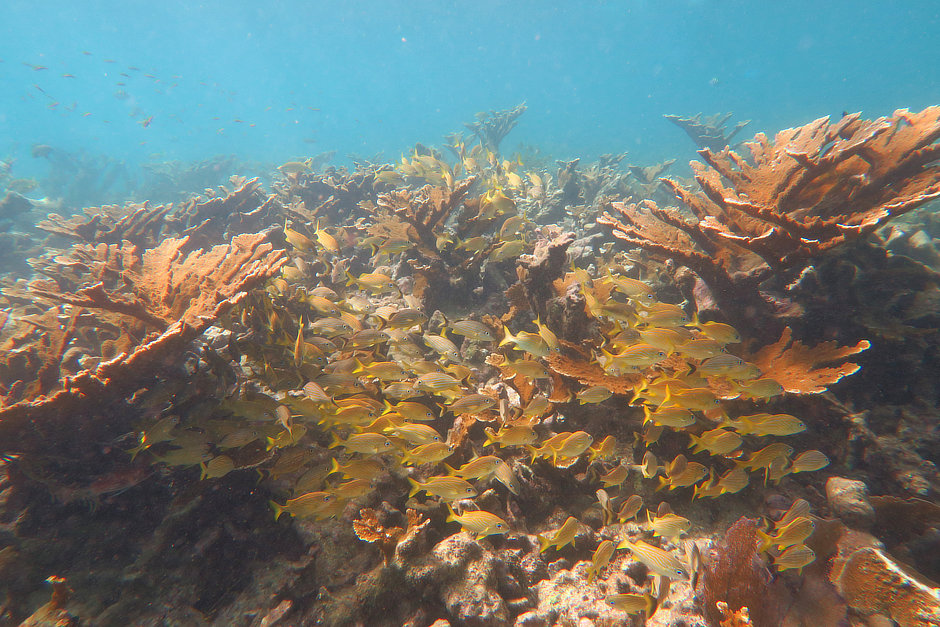
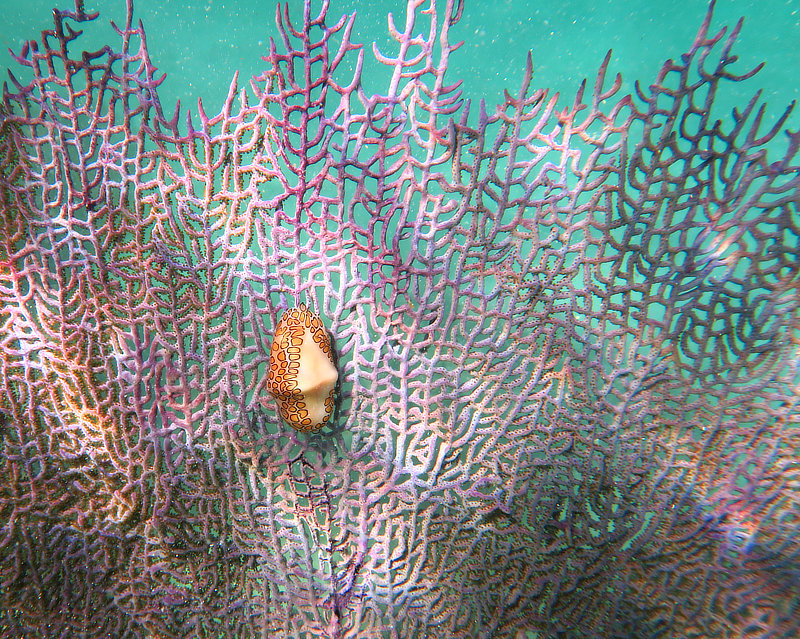
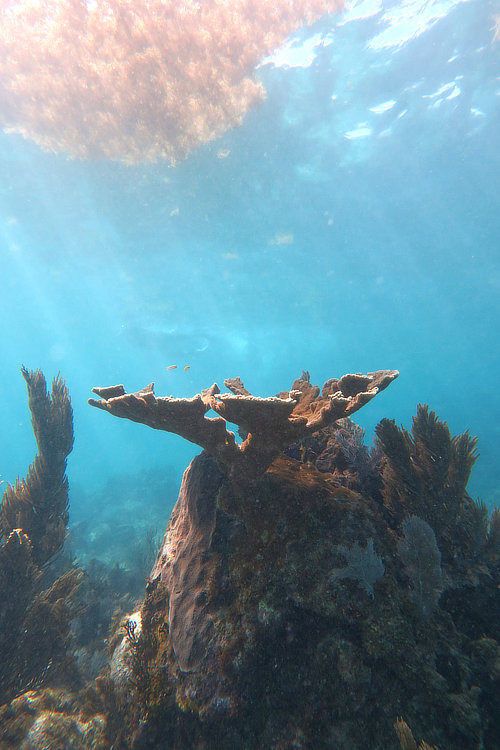
Except in certain small areas, the soft corals, sea fans and sea rods, were the most common corals seen. The majority of alive and healthy hard corals, including fire corals (to our surprise), were few and far between. There were a few patches of Elkhorn.
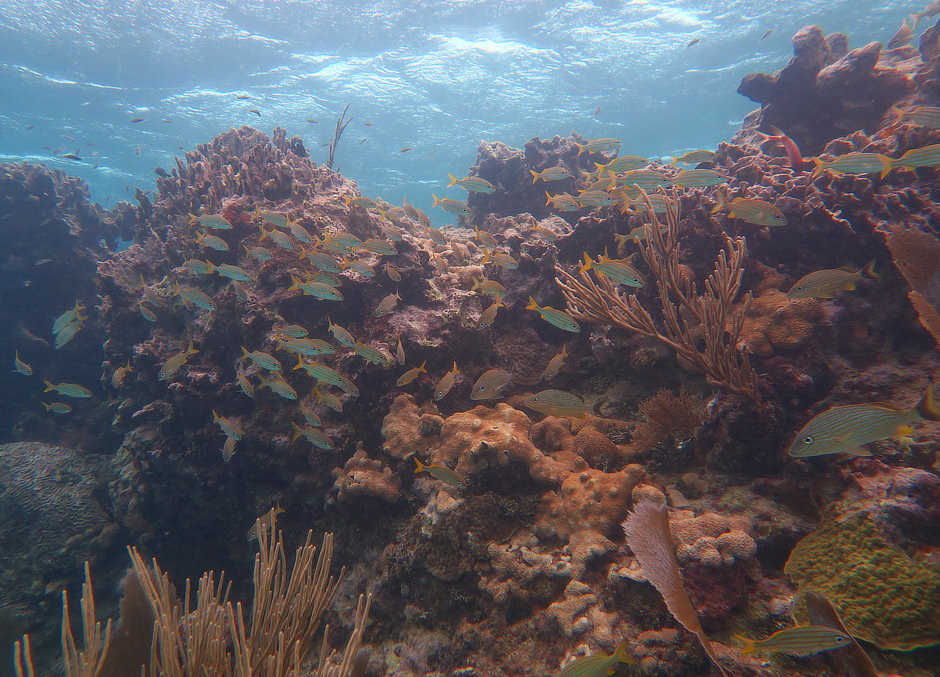
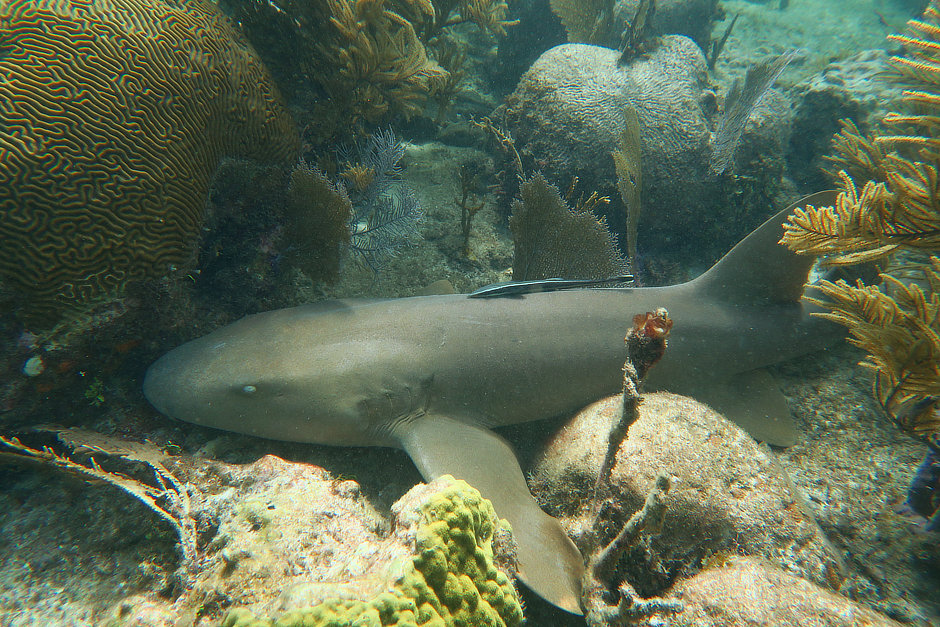
The number of fish we saw while snorkeling Turneffe Atoll was low, though there were some schools of grunts and chubs, quite a few angelfish, and many different rays. There were also a lot of lobsters tucked in their holes, an octopus, and nurse sharks, which were a joy to see.
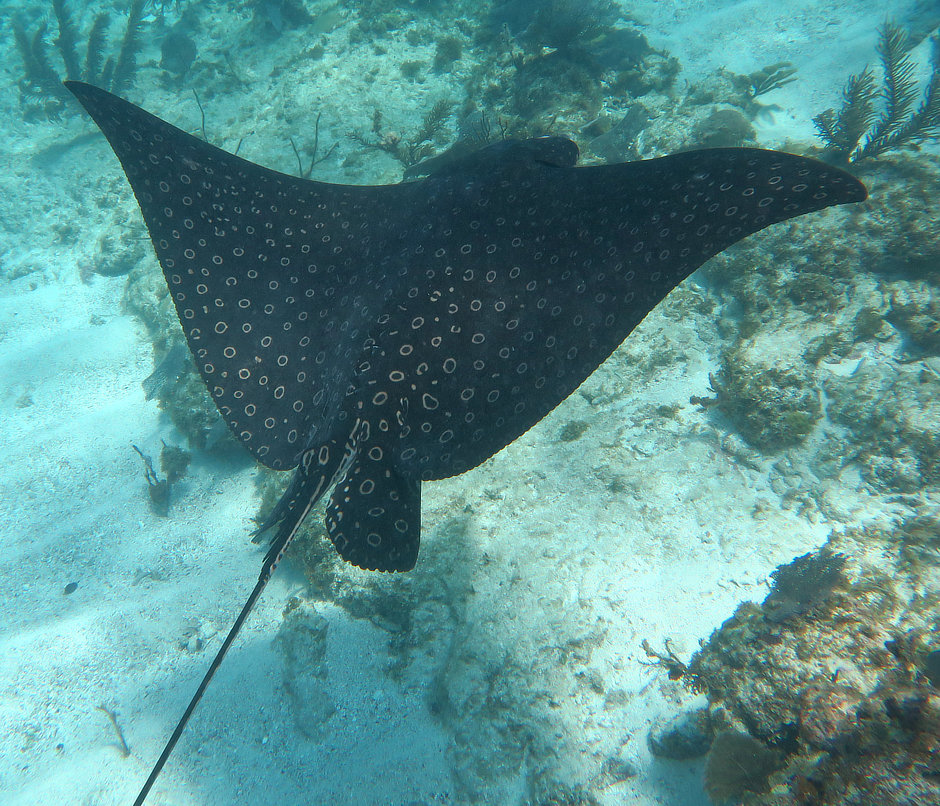
Large Spotted Eagle Rays are common in this area and we saw many. We also saw a number of Yellow Stingrays, some Chupare Stingrays, and some Southern Stingrays.
Reportedly Turneffe Atoll is the most biodiverse atoll in Belize. The atoll is a marine protected area where some activities are managed in some areas, protecting certain species and the future of commercial fishing. Turneffe Atoll is the largest marine reserve in Belize.
Where We Snorkeled
For snorkeling Turneffe Atoll, we took two daily boat trips from a resort (more below). Nearly all the spots were well away from any land or the mangrove islands. They were mostly at the edge of the atoll, on either the east or west side, depending on the wind direction.
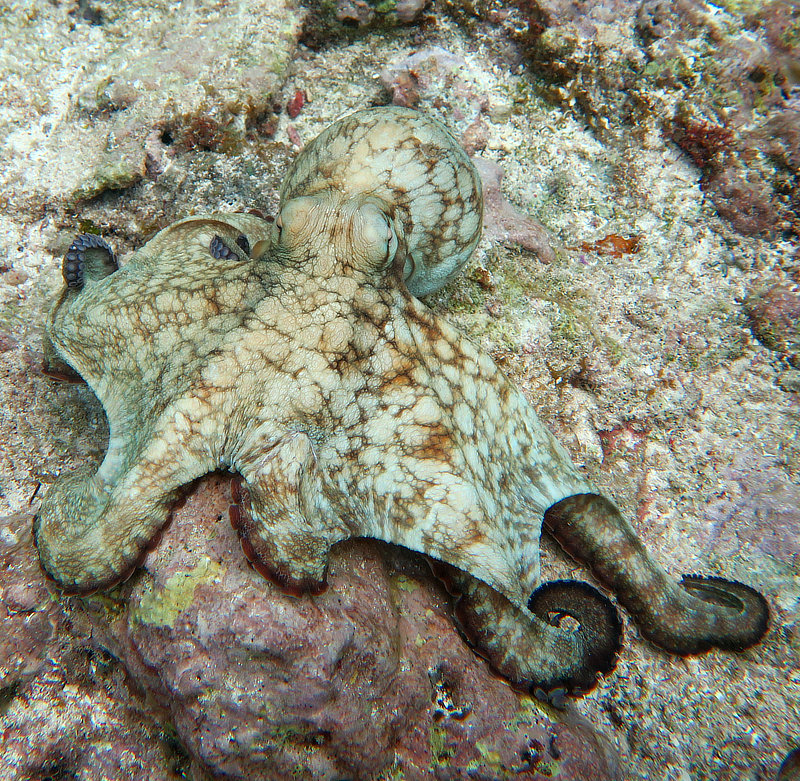
While snorkeling Turneffe Atoll we found a good number of shallow spots with some sea life to see, but some were definitely more alive than others. Our favorites were Secret Spot and Harry’s Coral, which had good depths, and fun sightings, like Tarpon, octopus, a nice stand of Elkhorn, gorgeous tiny juvenile Spotted Drums, a White Spotted Toadfish, lobsters, nurse sharks, and more.
If you like reading snorkeling information like this, you will also enjoy reading our free monthly newsletter.

Suggestions and Questions From Other Snorkelers

How to Visit Turneffe Atoll
Turneffe Atoll is 20-35 miles (32-56km) east of Belize City. It is the closest of the three atolls to the city. Of the three atolls, this one has the most islands, though many are mangrove islands.
We stayed at Turneffe Island Resort in the south part of the atoll as part of one of our partner’s trips there. The snorkel spots were within about 15 minutes of the resort. It was a great resort with luxury accommodations, great food and boat trips out to nearby reefs for snorkeling Turneffe Atoll. There is no house reef to speak of there. It is surrounded by seagrass beds.
Since we stayed in the south, we did not explore much of the middle or north of the atoll. There are other resorts to stay at on Turneffe Atoll, all of them north of Turneffe Island Resort.
The resorts pick you up and bring you back to Belize City by boat. For snorkeling Turneffe Atoll, you can also take day trips from San Pedro on Ambergis Caye, Caye Caulker, or Belize City.
Blurry Fish, Rotten Colors, Garbage Pictures
That does not look like what I saw! See our snorkeling camera pages for tips on selecting a good snorkeling camera, and how to use it for great pictures.
Is Sargassum an Issue for Snorkeling Turneffe Atoll?
As you probably know, the influx of sargassum seaweed in large mats that wash up on beaches and shorelines and then rot, has become a huge problem in the Caribbean in recent years. The amount of seaweed has been increasing and causing more and more problems as the years go by.
We visited at the end of February in a year that was predicted to be one of the worst for sargassum. Floats of it had already started coming in and piling up on the beach and around the boats, months earlier than when it usually starts coming in.
We swam through a small amount a number of times while snorkeling Turneffe Atoll. It was not really a problem yet. There was more of it at the spots on the windward (east) side of the atoll, and swimming through the larger mats of it was uncomfortable.
We think the resort could take you places where it is less of an issue during the worst season, but we are not positive that it can be avoided entirely during the high season for sargassum.
The resort workers removed the sargassum as it collected on the beach, which will keep down the smell issues with the rotting seaweed.