
Freediving as a snorkeler is distinctly different than the broader freediving sport. At least for most of us serious snorkelers anyways. What we enjoy are shallow reefs, filled with fish and creatures and corals to see. And we use freediving techniques to get closer to these delights, to check them out up close, and take some pictures. And it is important to get freediving training, even for a snorkeler, to do it safely.
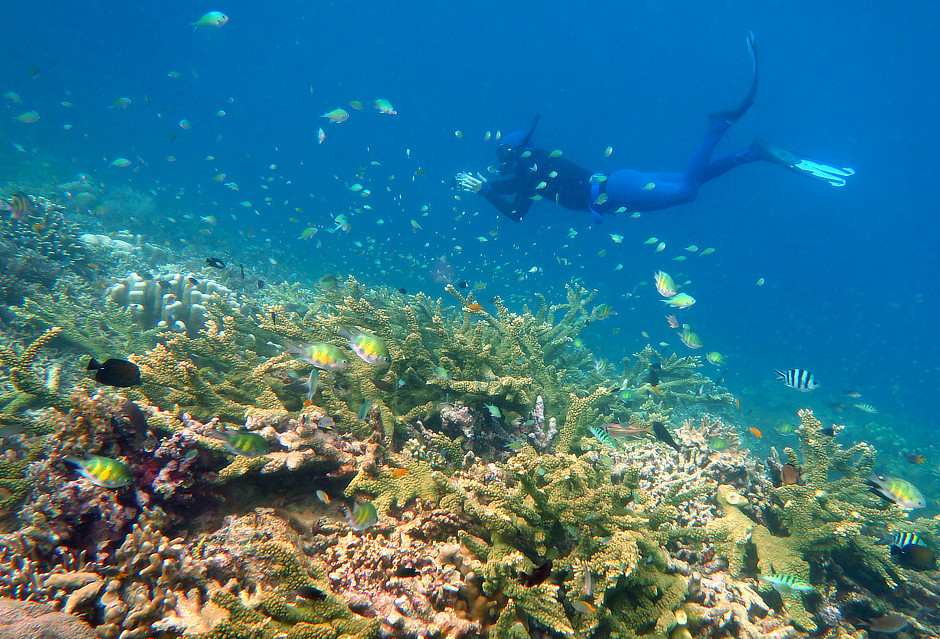
Why Snorkeling Freediving Is Fun
Freediving as a snorkeler is fun because it allows you to get a better close-up look at lots of things that you can’t see as well up on the surface. That could be a pretty nudibranch that is tiny, or a maybe a cool Wobbegong Shark hiding under a ledge.
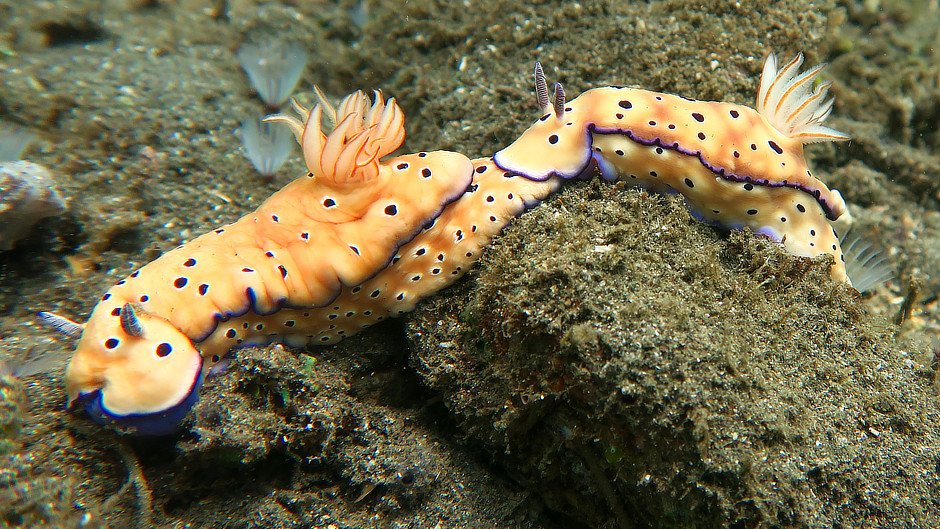
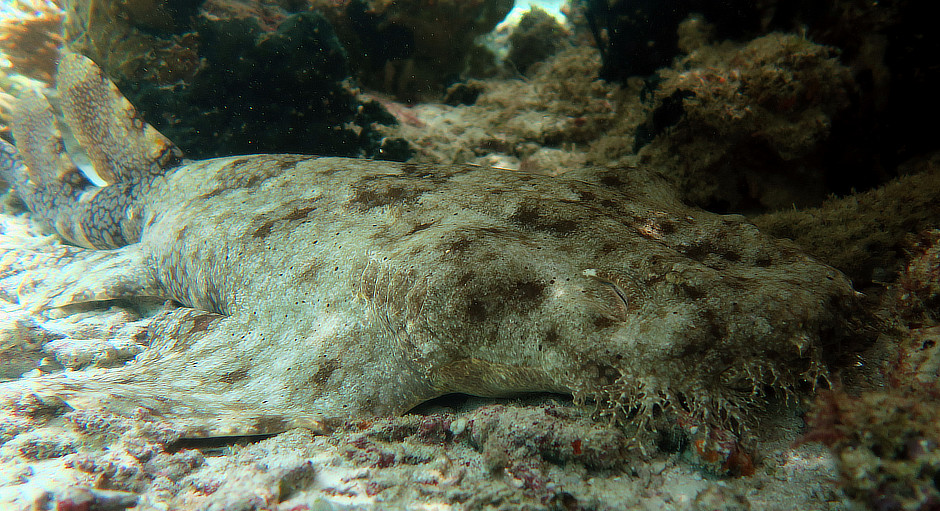
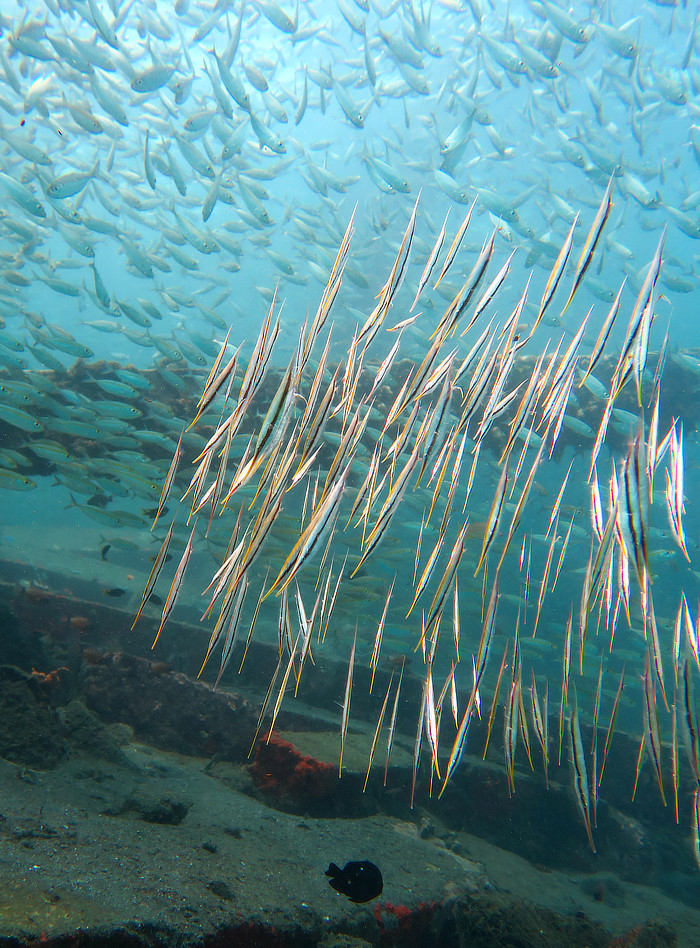
And if you like taking pictures of your underwater adventures, then freediving as a snorkeler is almost an essential skill to have to get good pictures. When you have a bunch of water between you and your subject, the image quality is reduced, and generally your subject is too far away for great pictures. The other benefit, besides getting closer, is that you can change your angle of view, giving nice blue backgrounds, so your subject is not lost in all the visual clutter of the reef below. For example it would be very difficult to see these Razor Fish, without being able to look up at them from a lower angle.
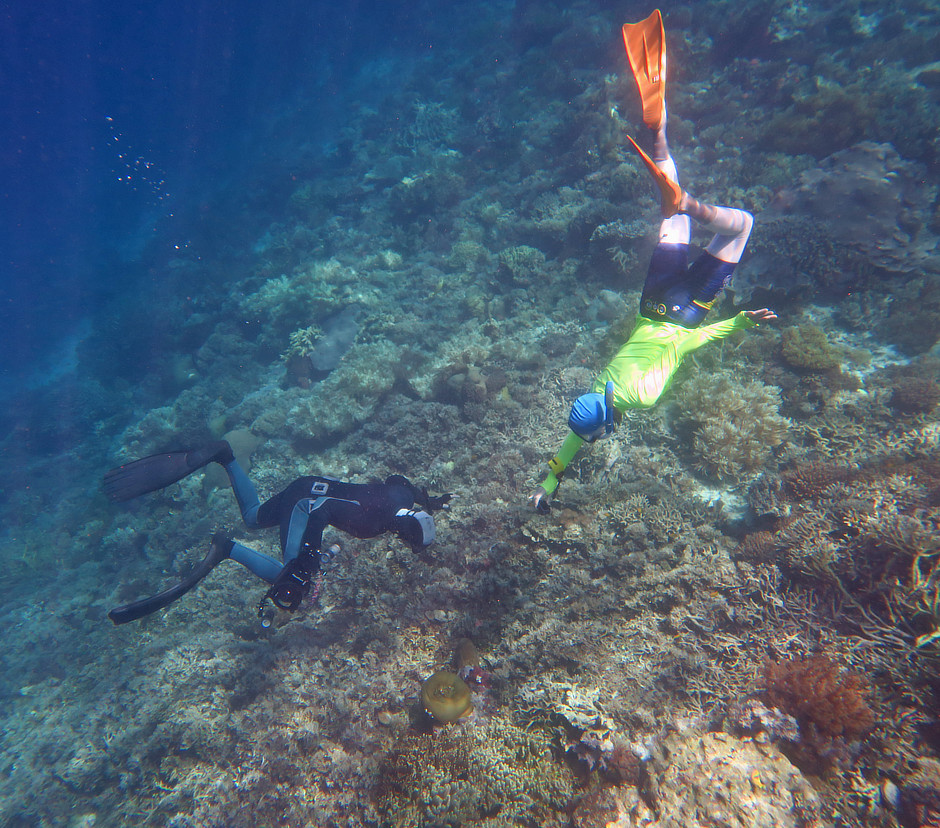
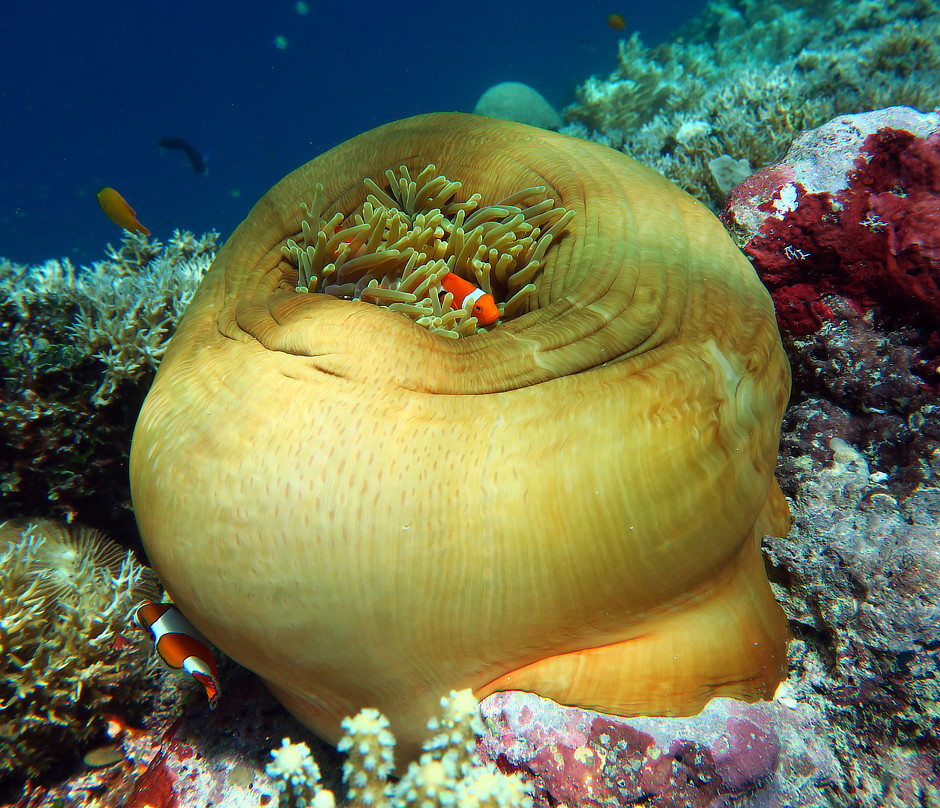
Galen took the picture of these two freediving snorkelers who were taking pictures of a big anemone and its fish. After they were done, he took his turn, and took the next picture.
There are so many beautiful small creatures and corals that reveal themselves more fully when you can dive down and get closer, like the anchor and bubble corals below.
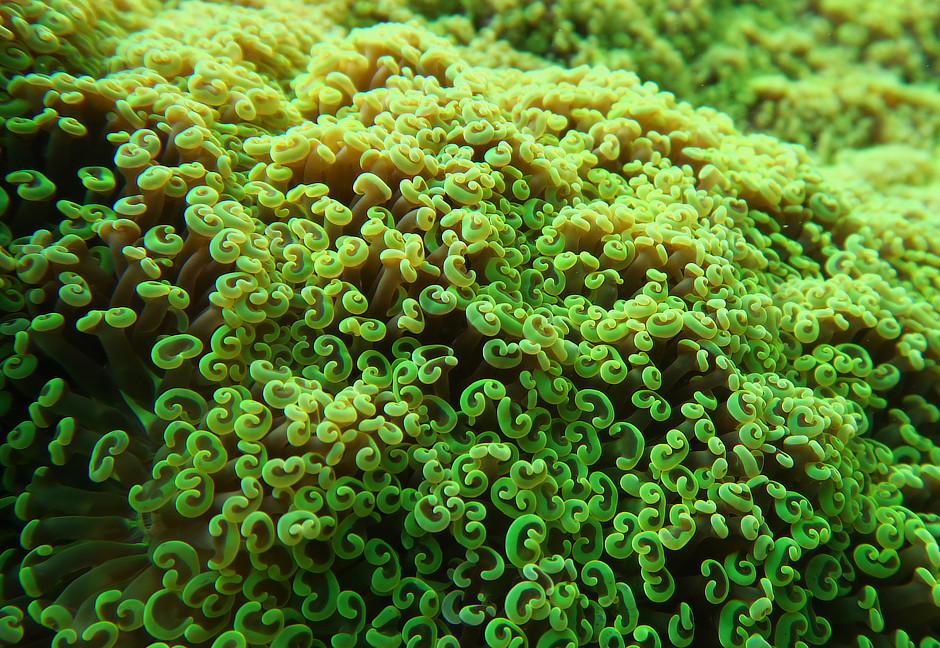
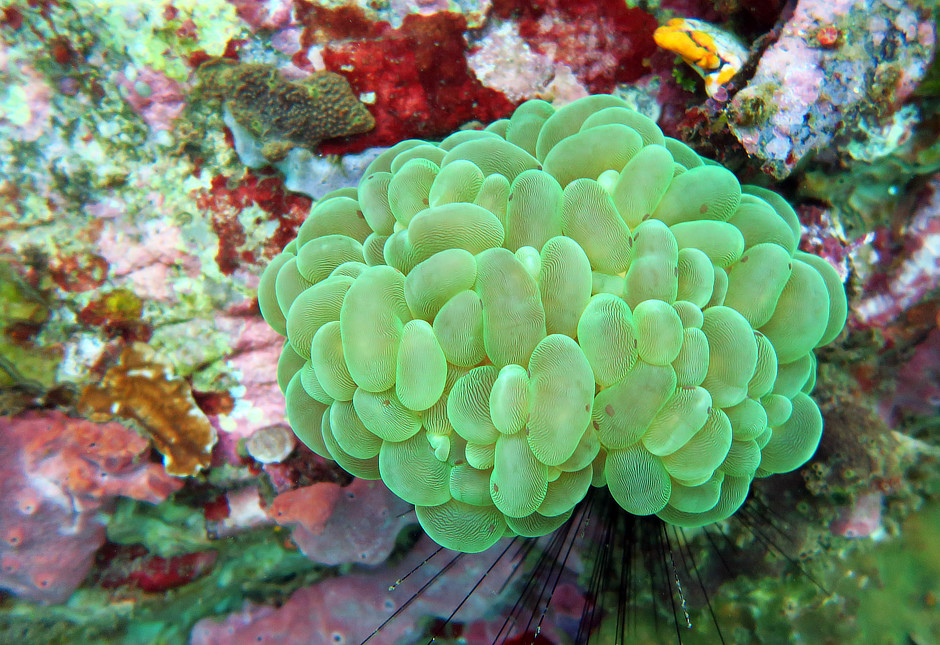
Freediving as a snorkeler allows you to see things closer and take better pictures, and there is just a great sense of peace to be found when you dive underwater. It is quiet and calm, and when you are relaxed underwater there can be a wonderful joy associated with diving.
We send out a free monthly newsletter every month with snorkeling tips and information like what is on this page. Get yours here.
Why Freediving as a Snorkeler Is Different
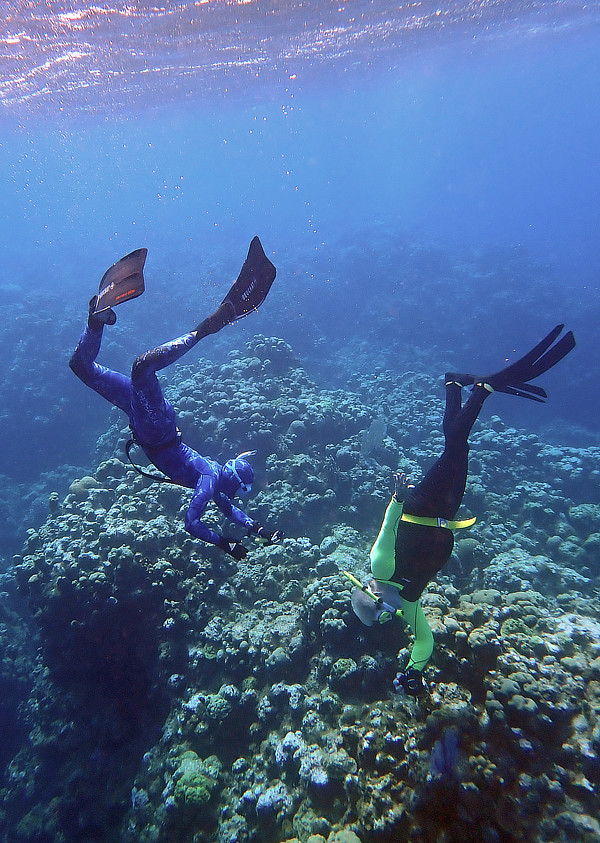
Typically us snorkelers who freedive don’t go down very deep. It is relatively rare for a snorkeler to freedive beyond 26 feet of depth (8 meters). Most of the time it is in 10-15 feet of depth. And that is because, as mentioned, we like shallow reefs. We don’t enjoy snorkeling where what you are looking at is in deep water. We like it up on the shallow surface, with all the wonderful sunlight playing off the colorful reef and creatures, warming up our backs. We happily leave the dim, dingy colored depths to the tank divers.
Since we don’t go very deep, we also don’t tend to need to hold our breath very long. Twenty second dives are most common. A minute is on the long side. It’s easy, and not as dangerous as long breath holds. Freediving as a snorkeler is still dangerous, and proper technique and training is important. But it is very different than the long breath hold, deep dives that the freediving sport is more broadly known for.
Snorkelers also don’t generally enjoy having to travel with the very long fins that are so valued by freedivers. They may be fantastic for getting down deep very efficiently, but are a pain to get in luggage, and can be very challenging to maneuver with around shallow corals. Galen still prefers to use good quality snorkeling fins, even though he dives constantly. Nicole has begun to use slightly longer fins after her training and likes them, but nothing as long as most freedivers use. So the equipment needs for a diving snorkeler are also a little bit different.
Another big difference, for us specifically (Galen and Nicole), is that although we want to know how to dive safely, efficiently and correctly, we do not care at all about certifications. In fact we strongly resist the idea of industry entering the snorkeling field and trying to install required certifications, with all the associated costs, entry barriers and vanities.
We enjoy snorkeling because of how simple and free it is, in terms of equipment, costs and the other trappings that so bog down many sports. Can you imagine being told you can’t snorkel a beach, or join a snorkeling group unless you have a required snorkeling certification? It could happen, and industry has expressed interest in trying to make it happen, “for your own safety”.
All of this is to say that freediving snorkelers are not the same as freedivers, just as we are not the same as tank divers. There is enough of a difference in use, intent and temperament, that we almost wish we could come up with a different term for a snorkeling freediver. Snorkel diving?
Still, we firmly believe that snorkelers who dive under the surface should get training. Freediving as a snorkeler is more dangerous than staying on the surface. Some of what you need to know to stay safe is not obvious, and there is a lot of bad information and suggestions out there.
Galen did not get training for many years. The things he experimented with, trying to learn himself, and taking bad advice, were dangerous. Nicole started diving near the end of 2024, after believing for years that her past ear equalization problems prevented her. Galen gave her some tips from his training, so she started on her own, and surprisingly, equalization was not a problem. She attended a training near the beginning of 2026 and learned more about safety and her breathing. It has opened up an entirely new world for her to explore.
Where to Learn Freediving as a Snorkeler?
So let’s say you are a snorkeler who wants to learn how to dive safely. Where do you get training? Most freediving companies have a beginner course that should give you the basics of what you need. Just realize that many of them don’t yet seem to acknowledge that what a snorkeling freediver needs and wants is different than what the normal freediver is after. So you will likely discard aspects of the training that don’t fit your needs.
And generally speaking, the freediving and tank diving businesses will try to convert and funnel you deeper into their arenas, which is fine if you are strongly drawn to it. But it is also great to be a shallow water freediving snorkeler. It’s not some lesser activity.
Snorkeler Specific Freediving Training at Beautiful Locations

The good news is that our snorkeling trips partner is one of the few companies that understands the different needs of freediving as a snorkeler, and has teamed up with a world-class freediving instructor to create snorkeler specific training. The workshops are in beautiful snorkeling destinations around the world, so you get to see some reefs as well, and meet other folks of like mind. We have both taken these trainings and can easily recommend them.
Current Freediving Training Courses:
Bunaken and Bangka Snorkeling and Freediving Workshop Trip
Belize Snorkeling and Freediving Workshop Trip
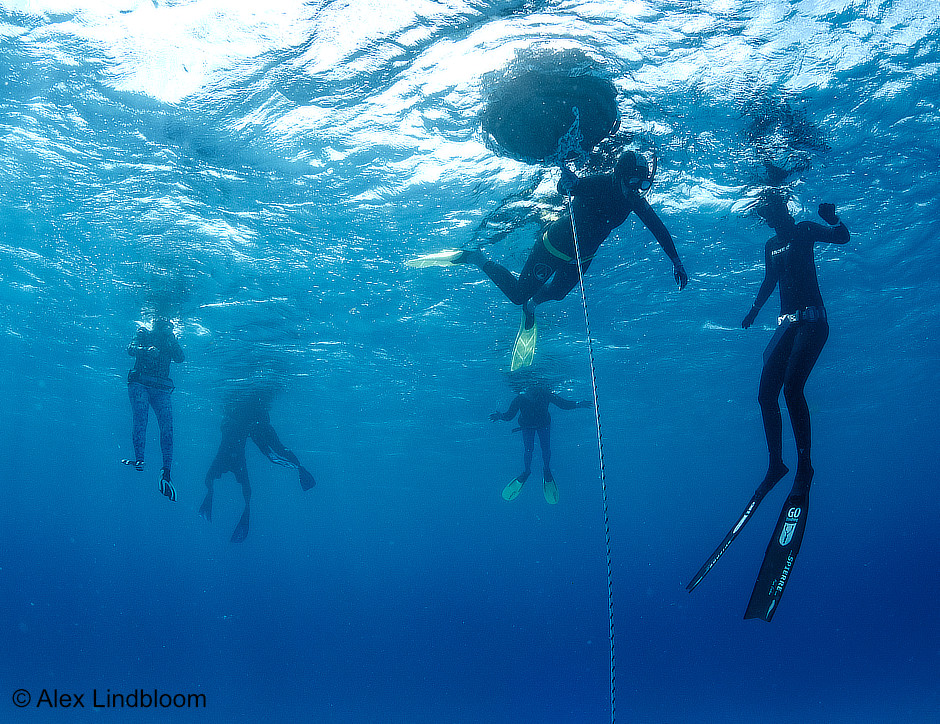
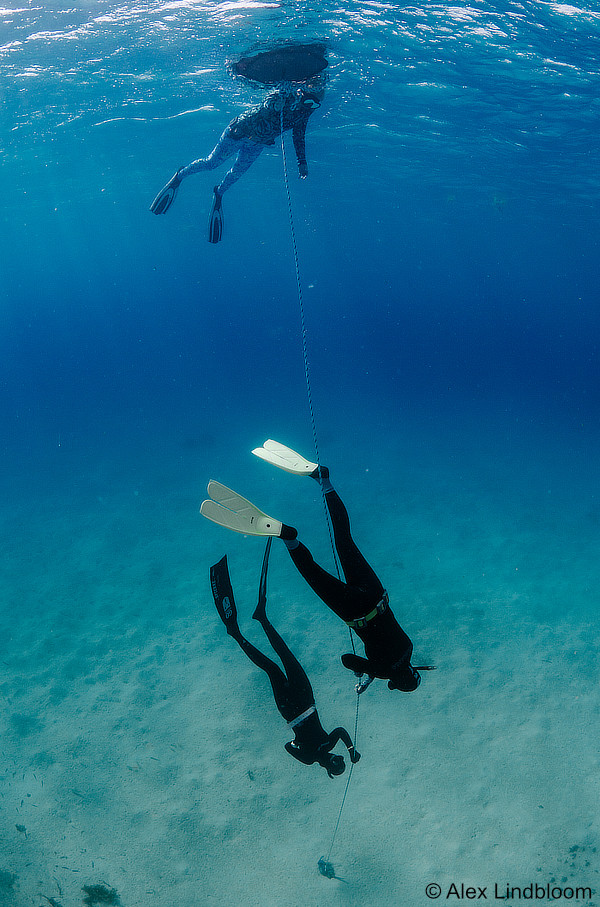
In these trainings you spend time learning out of the water, and will learn some skills in a pool. You will also train in open-water at a shallow spot with a floating line setup. You will begin pulling yourself down the line, while your dive instructor sticks right with you and watches to make sure you are OK all the way. First you learn correct breathing techniques, how to equalize your ears correctly, safe weighting, and other safety topics. Then you move on to body positioning, finning, and duck diving techniques. In no time at all, your instructor will have you comfortably diving.
Below are pictures of Nicole (in yellow fins) training on the line, with her instructor watching her. For nearly 40 years, Nicole thought she could not clear her ears to dive, because of an incident when she was young. The instructor has many techniques to help with equalization, among other things.
Snorkeling Freediving Tips
Now, we are not freediving instructors. You should not take what we are about to say as training. Mostly we just want to put some things out there to help you realize what you might be doing wrong that could be very dangerous, and hopefully you will then get some training so you can be safe freediving as a snorkeler.
First Relax
Before you dive, you want to be very relaxed on the surface. Relax all your muscles, your breathing and your mind. Don’t dive when you are tense or you feel short of breath.
Breathing
You don’t need or want to do a bunch of special breathing techniques before you dive. Trying to charge up your bloodstream with oxygen by breathing heavily before diving does not work, and causes other imbalances. Just relax, and breath normally. Only for your final breath, before you dive, do you breathe out fully, and then take as full a breath as you can, from the belly all the way up to your lungs.
Which leads to one of the important keys to a long breath hold. Many of us don’t breathe fully, from deep in our belly. Our breathing is often all up in the upper chest area, which does not fully activate the lungs. If your lower belly is not moving in and out naturally when breathing, you likely are only breathing using part of your lungs. Your freediving instructor can help with that, and you can also attend some yoga classes or other breath practices to learn better breathing techniques.
You keep that big full breath in the entire dive. Never let any of it out until after you surface. It is dangerous to try to control your buoyancy by breathing out some of your air.
Definitely do not breathe out right before you reach the surface. When people pass out from diving, it very often happens right at the surface, or even after they have surfaced and they breathe out strongly, before getting a new breath.
For that same reason, do not breathe out strongly that first exhale, once you reach the surface. Just breathe out a little bit, and then pull in a fresh breath. This is one reason you remove your snorkel before diving. More about that below. There are more advanced recovery breathing methods you can do, which are highly effective, but are best left to a qualified teacher.
Equalization of Your Ears
Learning to equalize or clear your ears is essential. You cannot dive even a foot or two without this. You should experience no pain or pressure in your ears when diving. If you do, immediately return to the surface. If you continue, you likely will damage your ears.
There are many different methods for equalization, and what works for one person may not work for another. For some it comes easily, for some it requires months of work, and special techniques.
Just know that you have to equalize your ears immediately when going down, literally right after your head starts to go underwater, and then you have to keep clearing them as you go down. Galen equalizes a bit before he even starts diving, and then equalizes a number of times in the first few feet, and more as he goes down. Nicole also needs to equalize very frequently to keep pressure from building up in her ears.
Duck Diving
If you understand the correct method for leaving the surface, the duck dive, then getting under is very easy, and requires little effort. If you find yourself kicking hard near the surface, trying to get under, you likely need to learn better technique. This is an essential skill for freediving as a snorkeler.
The most important thing to understand is that getting fully underwater actually does not require any kicking of the fins. It is all accomplished with a quick pull of one or two arms, and the rest is accomplished because you fold your body at the waist, and raise your legs up above you out of the water, so that you are vertical, and then the weight of your legs above your waist pushes you down underwater with gravity.
To start, your arms are out in front of you, you bend quickly in half at the waist, then pull with your arms, while straightening your legs directly vertical out of the water above you, and you will easily move downward to the point where your fins enter the water, and you can begin to kick and swim deeper. If you are having to kick hard at any point, your technique is not correct.
Getting completely vertical makes this all easier. If you are trying to dive at an angle, your body weight will not be above you, driving you down.
Below is a video of Galen at the freediving training. There are things to improve, but it does show how easy it is to get down underwater, and how comfortable he is once down, cruising around a bit.
Remove Your Snorkel
It is important to take your snorkel out of your mouth before you dive, for safety and comfort. One critical safety reason to do this is that if you have to forcefully exhale to clear the water out of your snorkel right when you finish your dive, you risk passing out.
This is also crucial with snorkels that have a dry valve at the top. Because the tubes on those snorkels will suddenly collapse under the water pressure at more depth, which will suddenly suck your tongue painfully into the snorkel mouthpiece. At best this is very surprising, at worst you take a bunch of water in and are in big trouble. Learn more about our favorite snorkels here.
Weight Belt
With proper diving technique you will not need extra weight to get underwater. But if you are wearing a wetsuit, that is highly buoyant, you may need weights to help. Setting the correct amount of weight is critical, and best left to professionals to explain. Many people use too much weight. If they lose their breath, particularly when a little deeper in the water, they will be negatively buoyant, and will then sink. You want to remain positively buoyant without a breath of air. We have an equipment page about weight belts here.
Fins
Freedivers have found that very long fins are very efficient. Try them if you get a chance. You will use much less energy and oxygen diving and can stay down longer because of that. Long freediving fins are challenging to travel with, and the good ones cost a lot of money. They are also not as good for maneuvering in a shallow reef, without kicking the reef. There are shorter freediving fins available that are a good option for snorkelers who want the improvement in time underwater. Learn more about our suggested snorkeling fins here.
Wetsuits
It is almost always colder as you go deeper underwater. So if you are freediving as a snorkeler you are likely to want a wetsuit, or a least full length rashguards to keep warmer.
Low Volume Snorkel Mask
As you dive more, you may find that down deeper the pressure on your mask increases, and you may have to depressurize your mask a bit (breathe out slightly through your nose). Generally, freedivers prefer to have a low volume mask, which means it does not have much air inside, and sits closer to your face. Learn all about different masks we recommend on this page, including some low volume ones. Do not try to freedive in a full face snorkel mask. You can’t clear your ears properly with them, and they have a huge amount of air inside.
Diving Buddy
Freediving as a snorkeler is definitely more dangerous than staying on the surface. You should always have someone with you who is watching when you dive, preferably someone who can dive down and get you if you become unconscious.
Be Cautious When Freediving as a Snorkeler
Because it is more dangerous, just operate with a sense of caution when diving. Consider the consequences. Maybe it looks fun to dive down and swim through a cave or arch. But think about what happens if you bang your head, or a piece of your equipment snags on the way through.