
Have you ever wondered about freediving fins for snorkelers? Are they necessary? Which fins are good for snorkelers? What are the features snorkelers should look for? Will they fit in your luggage? What are the benefits and disadvantages? We will answer all these questions and more on this page.
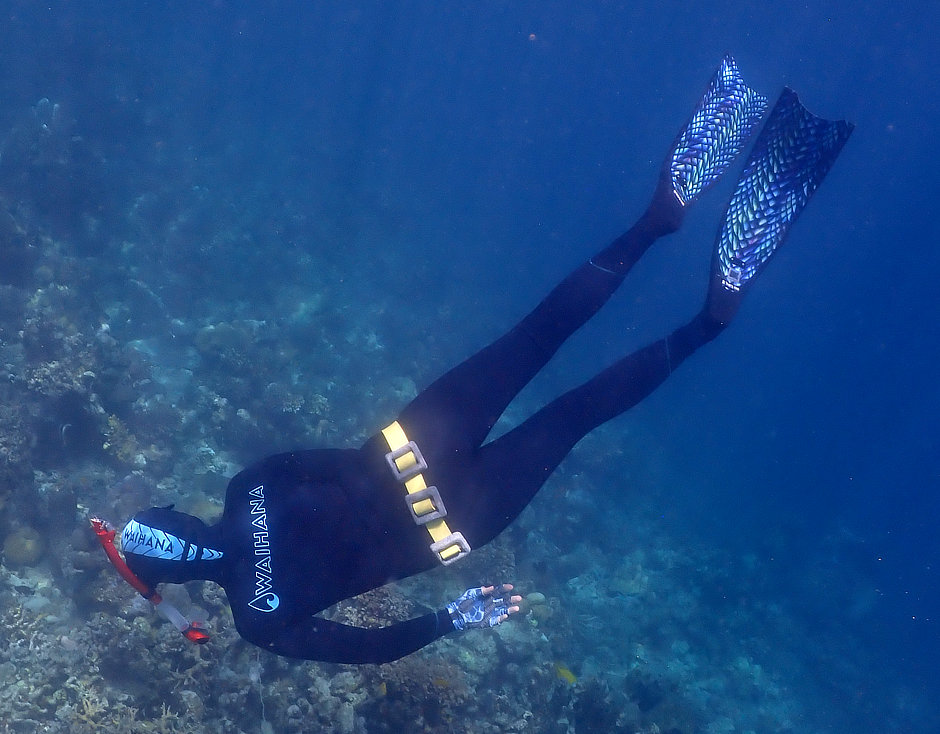
As we wrote, freediving as a snorkeler is not the same as the dedicated sport of freediving. We are primarily snorkeling and interested in the reef, so the freediving we do is to simply get closer to the reef and creatures to see and photograph them better. In contrast, freedivers are in it for going down as deep as they can on one breath.
To do this, freedivers wear really long fins that make them go farther with less effort, saving their oxygen so they can hold their breath, stay under longer, and go deeper.
Are Long Fins Necessary for Snorkelers?
No, they are not necessary at all. Freediving fins for snorkelers do have certain benefits that some folks might be interested in, but you can dive down and see the reef just fine in normal snorkeling fins. In fact, Galen prefers to wear snorkeling fins. See our recommendations for snorkeling fins here.
Note: Our suggestions come from hands-on experience. We hope you find them helpful. You can help us if you purchase from the links below. We may make a small commission, as an Amazon Associate or from other companies, at no extra cost to you.
Recommended Freediving Fins for Snorkelers
Here are our recommendations for freediving fins for snorkelers. They are among the shortest freediving-style fins available. Following that is more information about features and sizing. And at the end of the article is a list of benefits and disadvantages to longer fins.
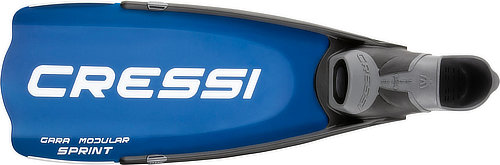
Cressi Gara Modular Sprint – Blade Angle 29°, Blade Length 65cm
These fins, if they fit, are our number one recommendation for freediving fins for snorkelers. They offer a plastic interchangeable blade at a good angle for easy surface snorkeling. You can separate the blade from the foot pocket, so you can fit them in a normal sized suitcase.
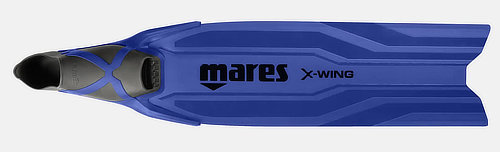
Mares X-Wing Short – Blade Angle 30°, Blade Length 61.3cm, Blade Color: Pink or Blue
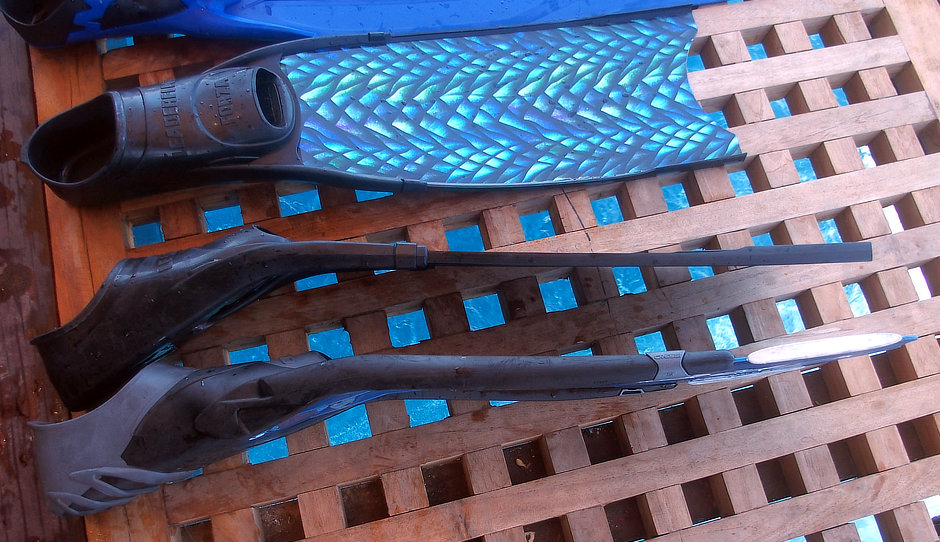
Be sure you are looking at the Short model, as there are longer versions of the same fins. These are great freediving fins for snorkelers, with a good angle for surface swimming. They offer a plastic interchangeable blade. You can separate the blade from the foot pocket, so you they will more easily fit in a suitcase, but based on the actual length of these fins (see photo above), you will likely need a long suitcase.
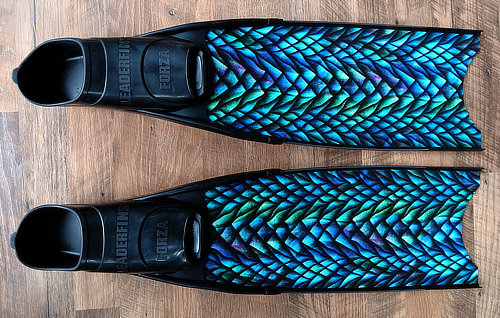
Leaderfins Fiberglass Bi-Fins – Blade Angle 33°, Blade Length 60cm (Extra Short), Choice of Softness
These cost nearly twice as much as the Cressi and Mares options above. They offer interchangeable fiberglass blades. They are made to order in Estonia. There are lots of choices: angle, length, softness, foot pockets, and optional protective and/or image films on the blades. In order to get the angle option you have to upgrade to their Limited Edition Bi-Fins. You can buy some Leaderfins on Amazon at the link above, but the fins there are not offered in the 33° angle or the 60cm length. There are many designs offered, and you can end up with some flashy fins.
Honorable Mention:
Beuchat Mundial One 50 – Blade Angle 22°, Blade Length 50cm, Choice of Hardness: Strong or Soft
Be sure you are looking at the 50cm model, as there are longer versions of the same fins. These are not easy to find in the USA, but if you are in Europe, they should be available. They have a plastic blade and a fixed foot pocket. We would prefer that they were in the 30° angle range, but they seem like they work OK at the surface. There was a previous version that does not offer a choice of hardness, and we hear that they are quite stiff, which you don’t want. These fins require a longer suitcase for travel.
If you are finding this information useful, we share more in our free monthly newsletter, sign up now.
Freediving Fin Features
Types of Blade Material
With freediving fins for snorkelers, there are basically three types of blade material, plastic, fiberglass and carbon fiber. Plastic blades are the least expensive. They are durable, but are not as fast to snap back to straight, so are not as efficient. Fiberglass blades are the next step up and are more expensive. They are a bit less durable, particularly to impact. But they are much more efficient than plastic blades, and snap back fast. The most expensive option is carbon fiber. They are very fragile, but offer the highest efficiency.
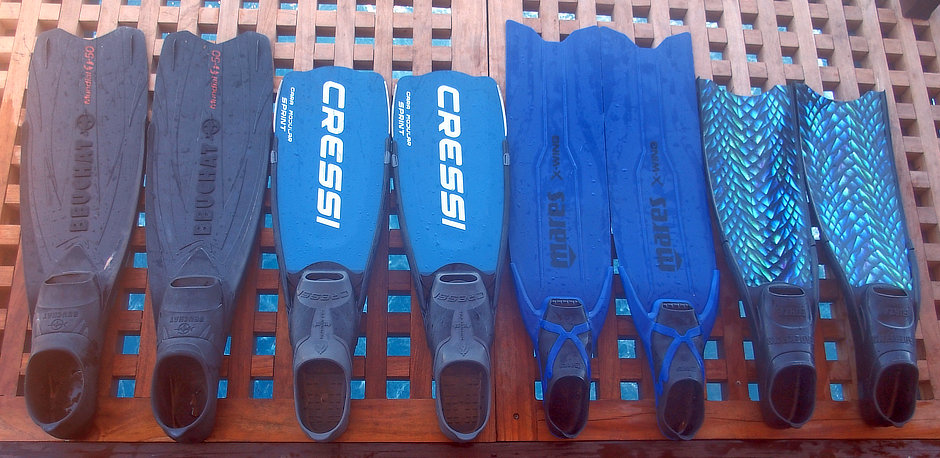
For most snorkelers, plastic blades will work great. We recommend three different fins with plastic blades. I have tried the Cressi and it was a remarkable improvement over my snorkeling fins. I have friends who use the Mares X-Wing Short and find them to be powerful and comfortable. Another friend wears the older version of the Beuchat Mundial One 50 fins and they are powerful, but a bit on the stiff side, so hard on his body.
When I, Nicole, was shopping for longer fins, I decided to splurge and got Leaderfins fiberglass. They cost twice as much as the highest priced plastic fins. They are made to order and I got an image design that is a film applied to the fiberglass, which also provides some protection. You can choose your foot pockets (including color), blade angle (I recommend 33°), blade length (I recommend extra short 60cm), and stiffness (depending on your weight and strength, mine are soft).
Blade Angle – Why It Matters
When I took my freediving training in early 2025, I tried two different pairs of freediving-style fins and they were both remarkable in how little effort I needed when I dove down. Just a couple kicks and I was at the reef. But I also learned that the angle of the blade makes a difference to a snorkeler who is primarily swimming at the surface.
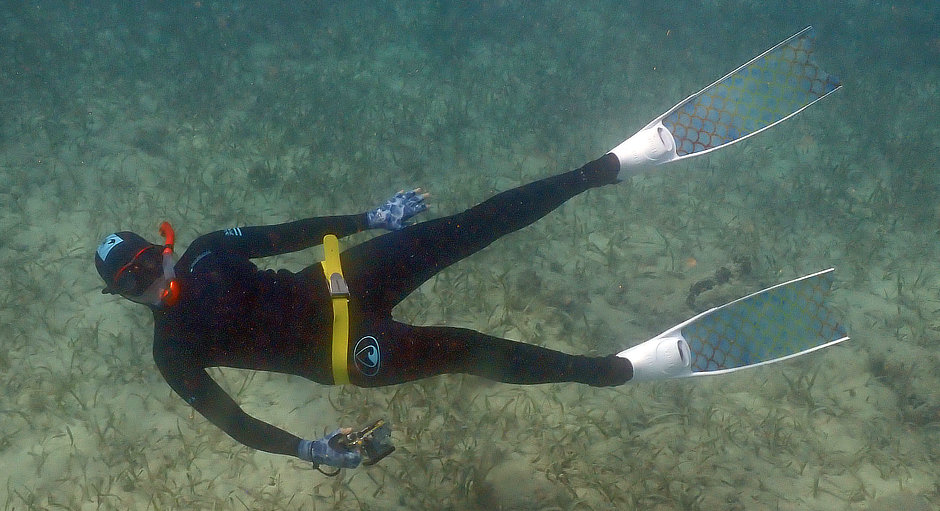
The Leaderfins fiberglass fins that I tried (photo above) were set at the standard 20°. I found it very difficult to swim at the surface with these fins. I also tried the Cressi Gara Modular Sprint, which are set at 29°, and they felt like my normal fins, easy. That is why I purchased fins with a 33° angle and recommend you do too.
Foot Pockets
Freediving fins are always full foot pocket fins. This type of foot pocket provides the most efficient power transfer.
On many freediving fins, the foot pockets are separate from the blade and can be changed out. That is true for three of our recommended freediving fins for snorkelers, the Cressi, the Mares, and the Leaderfins. The benefit of this is if you ever want longer blades, you can just buy the blades and not more foot pockets. They can also be disassembled for travel, read more below.
Sizing Suggestions
Sizing is variable and trying fins on before buying is always the best choice, if possible. Our freediving instructor recommends wearing 2-3mm neoprene socks to prevent blisters and for warmth. The warmth thing is not really an issue for freediving as a snorkeler, so it is a personal choice whether you want the neoprene socks or not. I personally wear a thin lycra sock, which is primarily for sun protection, but does provide minor protection against rub spots.
Waihana, the company that makes my favorite wetsuit, makes 1.5mm neoprene socks in short and high top that would be great if you want some (they also offer 3.5mm if you run cold or your fins are quite loose, but beware, they will be more buoyant).
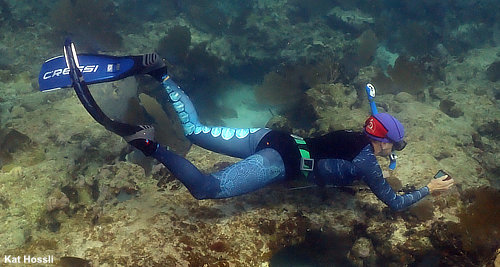
The Cressi fins don’t come in a very small size. I normally wear a EU 39, but the 38/39 was too loose, unless I wore quite a thick neoprene sock. The 36/37 fit me, a woman with size 8.5-9 feet; their size chart says it fits women size 5/6, which is not true. So if you have small feet, you probably won’t fit into the Cressi fins. Also, they may overall run big.
Based on our friend’s experience with the Mares fins, the foot pockets fit true to size.
With the Leaderfins I found their suggestion of measuring my foot to choose the foot pocket size worked well. As I said, I did not need to adjust my size for a neoprene sock. They suggest if you want to wear a 3-5mm sock to go up one size. I say it depends on the expected fit. Mine fit quite snug and would not permit a neoprene sock.
Based on my friend’s experience, the Beuchat fins run big, he needed to size down, and there’s still room for a neoprene sock. I saw this on other reviews too.
Traveling With Freediving Fins
One of the reasons I chose Leaderfins was their ability to be disassembled, making them shorter to fit in my normal luggage. The Cressi and Mares fins both have the same benefit. Check out our snorkeling travel packing tips.
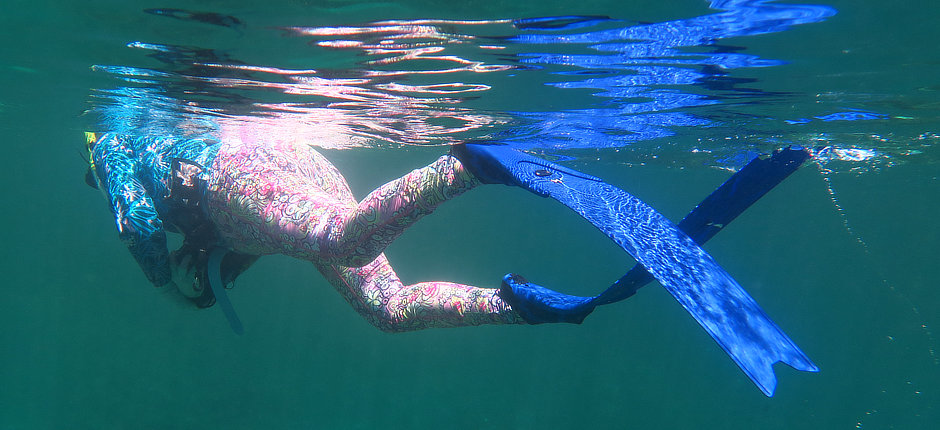
But the Beuchat fins cannot be disassembled, and the Mares fin blades are still quite long apart from the foot pocket, so you need to have a long suitcase to carry them on your travels. I have seen suggested elsewhere that you can get a separate long bag for your fins and take them as your carry-on. Doing this assumes that the flight attendants will allow you to place them in their tall closet. You can find long suitcases or bags to travel with your freediving fins, like this 34 inch Eddie Bauer suitcase, this 37 inch Cressi Tuna, or this 37 inch Osprey Transporter.
Benefits of Freediving Fins for Snorkelers
If you are wondering if you might like longer fins, the main benefit we see is being able to stay underwater longer, to have calm interactions with wildlife, explore something interesting, or get better photos. Because just like freedivers, longer fins allow you to use less oxygen getting down to the reef and swimming around underwater, which leaves you more time down there.
Another benefit to longer fins is power when you are swimming. You can get somewhere much faster and can swim against a current more easily while wearing freediving fins for snorkelers.
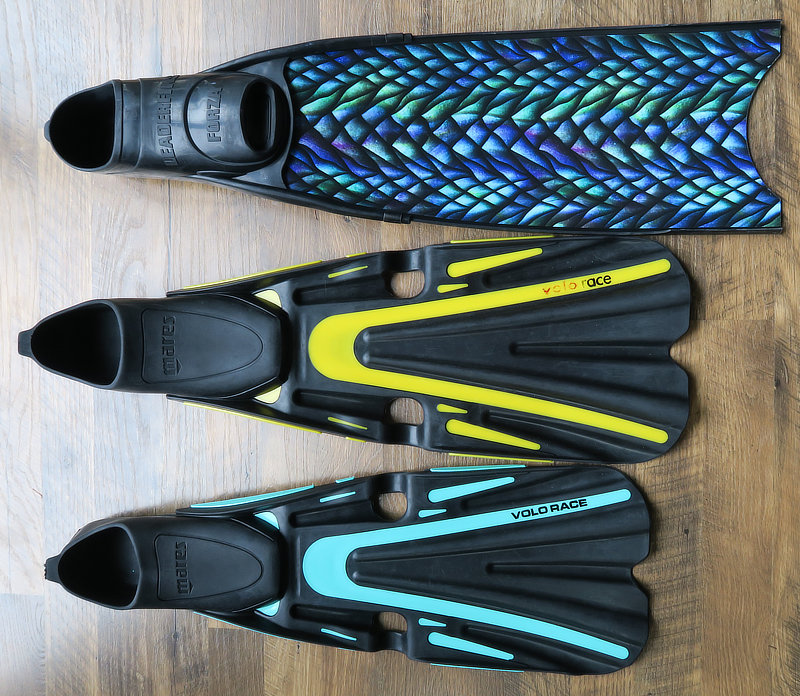
Unlike snorkel fins that have blade sizes that change with the size of the foot pocket—a smaller foot gets a smaller blade—freediving fins have fixed blade lengths, which offers a more standardized gauge of power offered. You can see this in the photo below.
Disadvantages of Freediving Fins for Snorkelers
Traveling with long fins can create a challenge, as mentioned above. But it is not an insurmountable problem.
It takes time to develop enough control in the shallows not to kick things, but it is possible. After my third week in them, I didn’t have to think about it anymore.
You may need to change the way you kick if you chose to wear longer fins. I found this the case when I started wearing longer fins. In order to get the most out of longer freediving fins for snorkelers, you need to use your hip flexor muscles (iliopsoas and quadriceps) in the front of your hips. When you do this, focus on the forward kick, pressing your thigh forward, keeping your leg straighter, like you do when you are walking. It may take some practice and strengthening, but it makes a huge difference in efficiency of the kick and the power you get out of it.
More Relevant Snorkeling Info
- Freediving as a Snorkeler – See more underwater, but be safe
- Snorkeling Fins Buying Guide
- Snorkeling Socks – protect from sunburn and blisters
- Packing for a Snorkeling Trip