
By Walter Mosley
Here is my snorkeling trip report from fantastic Raja Ampat. I stayed at Sorido Bay Resort on Kri Island. This was the sixth part of a two month solo snorkeling tour in Indonesia in the spring of 2026. I have shared five more reports from different areas visited on this trip; they are linked to below. I describe the reefs, visibility, marine life density, and boat logistics to help fellow snorkelers plan remote itineraries.
My Report About Snorkeling From Sorido Bay Resort
Raja Ampat is widely acclaimed as the “crown jewel of the Coral Triangle” and “the last paradise on Earth.” Despite challenges with visibility, rough seas, and overcrowded dive boats, this remains an extraordinary underwater world bursting with life and a fantastic place for snorkeling, with so much to enjoy.
The Snorkeling Setup at Sorido Bay Resort
I headed out on shared boat excursions for five mornings. The boats were custom made fiberglass with high-horsepower engines but, they were not large enough nor comfortable for the number of people (divers, snorkelers and guides) on most trips; bigger, better boats with more seating are needed.
Where I Snorkeled and Conditions I Experienced
Snorkeling sessions took place closer to shore at Cape Kri, Sawandarek, Arborek, and Yenbuba Jetties (watch a short video of what can be seen on the jetty pilings here), Friwen Wall, and Mike’s Point where the current was milder and the visibility better.
At premier sites, like Blue Magic and Manta Ridge, we had rough surface conditions with whitecaps and intense, ripping currents.
The visibility ranged between low and medium (approx. 10–18 meters) across exposed seamounts, improving significantly in protected nearshore pockets.
Sorido Bay Resort House Reef Snorkeling
In contrast to the turbulent open channel, the resort’s house reef (extending toward Cape Kri) offered far more manageable conditions. Notably, this reef system holds the world record for single-dive fish biodiversity (374 species documented on a single dive by Dr. Gerald Allen). Watch a video of this area below.
The Sorido Blue Hole just in front of the jetty is jam packed with soft and hard corals, sponges, reef sharks, and predominantly parrotfish, clownfish and batfish.
Underwater Observations and Reef Health
While coral coverage was extensive, coloration in several shallower sectors was noticeably muted or turning grey, displaying localized bleaching stress from recent sea-surface temperature spikes.
Snorkeler Tip: The nutrient-rich, plankton-dense waters that sustain this biomass can cause minor skin stings and irritations; wearing a light neoprene wetsuit or full-body rash guard is strongly recommended in Raja Ampat.
What I Saw in Raja Ampat
Schooling and solitary marine life were prolific; the marine biodiversity was impressive. Sightings included pelagics and predators like blacktip reef sharks, whitetip reef sharks, giant trevally, barracuda, large dogtooth tuna, Napoleon wrasse, titan triggerfish, and giant moray eels. Watch a video of a blacktip reef shark below.
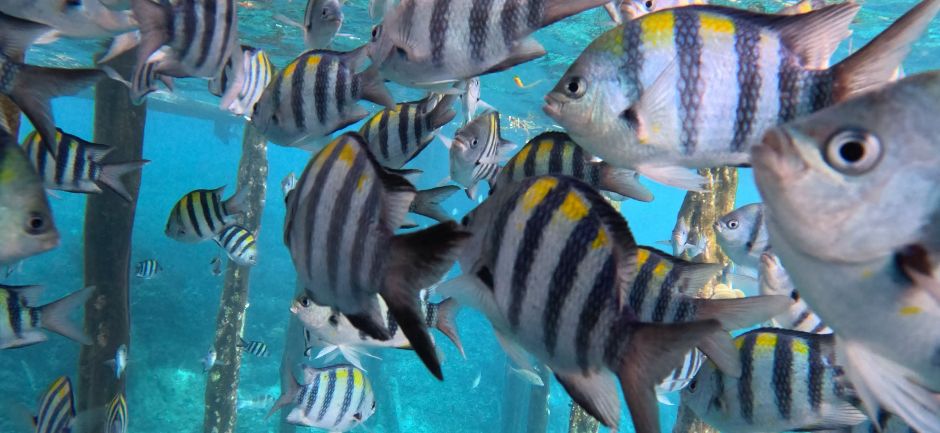
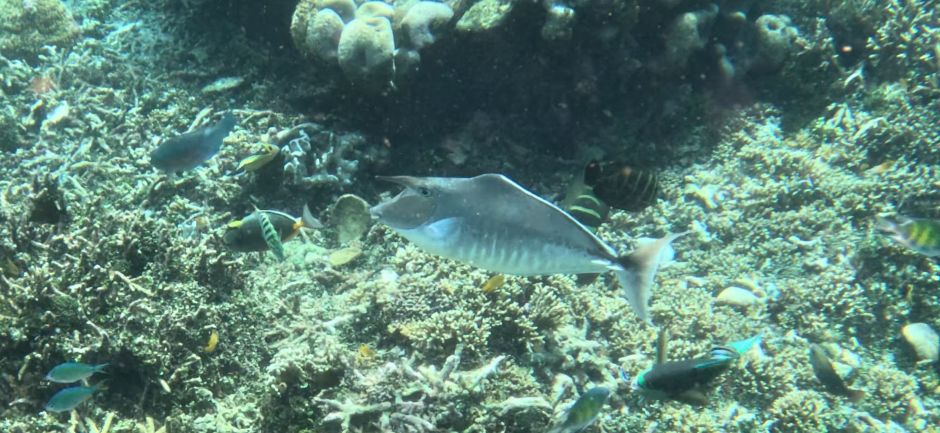
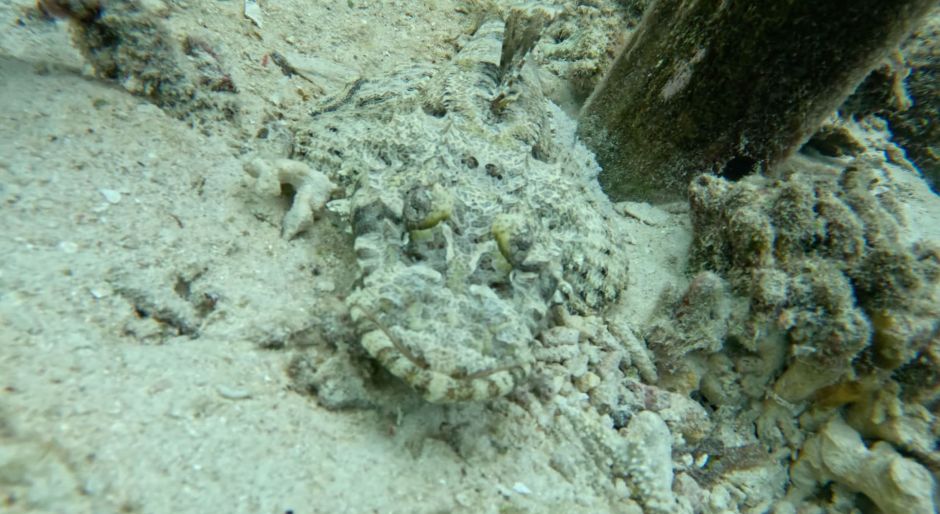
The reef fish included massive shoals of chromis, diagonal sweetlips (watch video here), butterflyfish, titan triggerfish, porcupinefish, black spot snappers, sergeant majors, damselfish, cardinalfish, unicornfish, majestic angelfish, groupers, surgeonfish, large napoleon wrasse (watch video here), crocodilefish (watch video here), and archerfish along the mangroves.
Numerous hawksbill and green sea turtles were also observed. See two in the video below.
We took several trips looking for larger pelagic animals like mantas, dolphins, and dugongs but were unsuccessful.
Coral and Invertebrates
Massive barrel sponges, vase sponges, staghorn, leather coral, toadstool corals, and extensive table/plating acropora formations were prevalent across the reef slopes (watch this coral reef video).
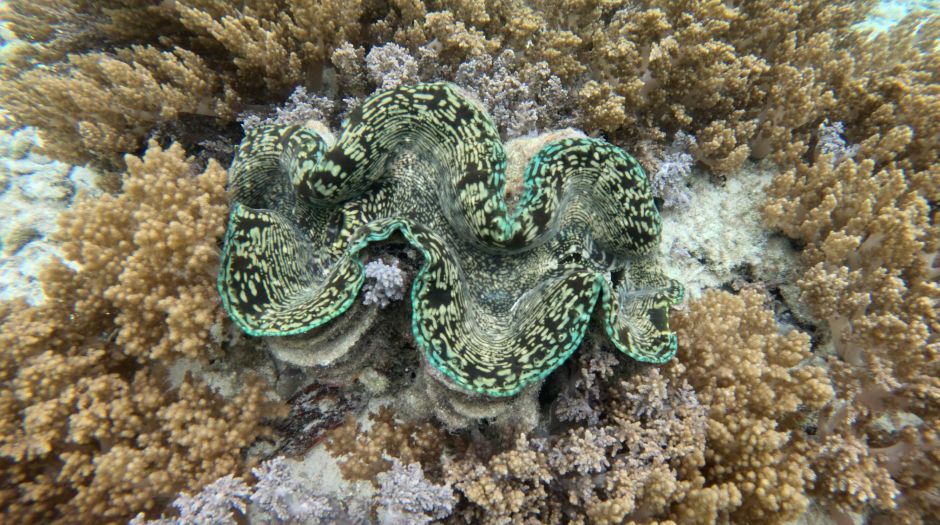
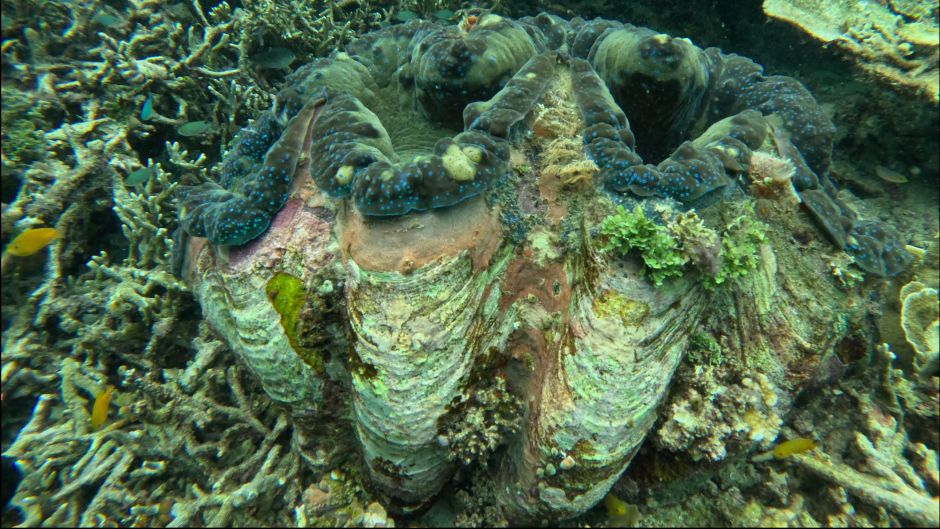
A standout feature was the abundance of ancient, mammoth giant clams (watch video here) measuring 4-5 feet (1.2–1.5 meters) in length—rivaling the largest specimens I have seen on Australia’s Great Barrier Reef.
ReShark Conservation Project
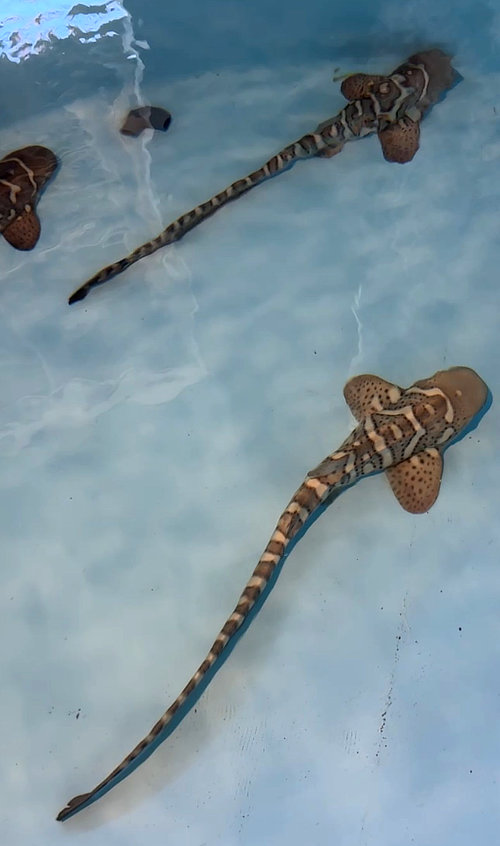
Sorido Bay Resort hosts the ReShark Conservation Project. There is an active leopard shark (also known as zebra shark) nursery area located in the shallows adjacent to the property. This was an interesting visit to find out about the lifecycle of these sharks from the “shark nannies” that manage the nursery.
They receive eggs from around the world and hatch them here. The sharks live here until they learn how to hunt for food, and then they are tagged and released into certain protected areas in the wild. The intent is to create a self-sustaining population for this endangered shark species in the Coral Triangle.
Underwater Photography Tip
The resort regularly hosts professional underwater photographers and cinematographers, including a National Geographic and Disney team among others. The multi-award-winning photographers Jennifer Hayes and David Doubilet’s recommendation for divers wanting high-grade mobile captures was to use the DiveVolk SeaTouch 4 Max housing, which works for both iPhones and Android Phones. It provides full underwater touchscreen functionality for smartphones (enabling access to native camera apps, ultra-wide lenses, and pro video controls).
While it is a compelling alternative, I prefer to use an action camera like my GoPro Black 12. I am too nervous to risk losing everything on my iPhone.
Travel Logistics
Reaching Raja Ampat is straightforward. Daily domestic flights into Sorong (SOQ) in Southwest Papua are available from major Indonesian transport hubs like Jakarta, Makassar, and Manado. I stayed overnight once again at the Swiss-Belhotel Sorong (revisiting my 2024 transit stop en route to Cove Eco Resort on Yeben Island, Raja Ampat).
Sorido Bay Resort arranged a pick-up and short drive from the Sorong hotel to the pier, followed by a direct two hour private speedboat transfer across the Dampier Strait to Kri Island. The boat was shared with 12 guests, some staying at sister property Kri Eco Resort (established in 1993), located less than 500 meters away. Both resorts are owned and operated by Papua Diving, a pioneer PADI Five-Star dive operator that opened the region to diving tourism in the 1990’s.
More Posts From My Trip
First stop: West Bali National Park
Second stop: Derawan Islands
Third stop: Saronde Island Gorontalo
Fourth stop: Bunaken National Marine Park
Fifth stop: Metita Beach Resort North Maluku
Thank you Walter for all six reports. I found them very informative and interesting.
Of the places that you have visited, could you tell me where is your number one snorkeling location in the world? Thanks.
Thanks so much for your super informative reports. So helpful.