

Updated July 2026
Choosing the right snorkeling fins, for your feet and how you will be snorkeling, can be slightly challenging because of all the brands and types.
Comfort should be one of your top priorities, but it’s also important to consider where you will be snorkeling. If the water entrance is rocky or sandy, or from a boat, or if there are strong currents, it will affect your fin choice. How stiff of a fin you get also depends on your fitness level and personal preference. Correctly fitting fins make all the difference for safe and fun snorkeling. Be aware that sizes on most fins are men’s, so women generally need to subtract 1.5-2 US sizes. If you go by European (EU) sizes, they are unisex.
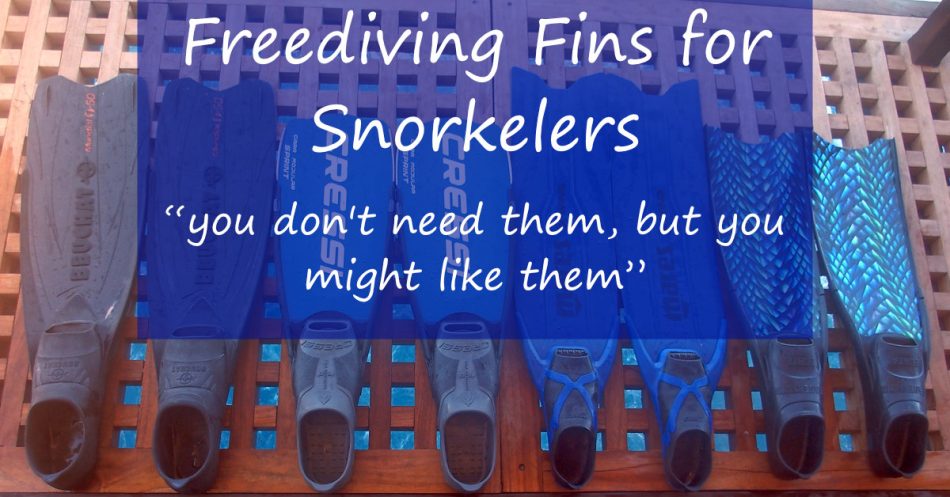
Not to worry though, on this page we will help you understand all of your snorkel fin options. We have used many different fins over the years, and our trip luggage is often bigger than we like because we regularly test new models. We will share which snorkeling fins we like, in different price ranges, and important fitting tips. If you enjoy the page we share new equipment reviews in our monthly newsletter. As you can see in the picture Galen took below of a group of very experienced snorkelers, there are many snorkeling fin preferences.

Note: There are a lot of diving fins available we have not tested because we don’t consider them appropriate for snorkeling. They are often very large, stiff, and heavy, made for propelling someone in heavy diving gear.
We recommend that all snorkelers wear fins. They are an essential tool for safety. If you get caught in any current and you are not wearing fins, you will have a much harder time swimming against the current and back to safety without them. And, since fins save your energy, you can spend more time snorkeling and explore more of the reef.
Note: Our suggestions come from hands-on experience. We hope you find them helpful. You can help us if you purchase from the links below. We may make a small commission, as an Amazon Associate or from other companies, at no extra cost to you.
How to Choose Snorkeling Fins – Full Foot or Open Heel?
One of the first choices you will need to make is if you want a full foot or open heel fin. Learn about the pros and cons of each below, and what we use.
Full Foot Snorkeling Fins – Benefits, Drawbacks, and Our Favorites

A full foot fin wraps almost completely around a bare foot. Generally you do not wear any footwear with this type of fin, although a Lycra sock can be worn to help prevent rub spots and protect from sunburn.
Benefits of Full Foot Snorkeling Fins
The reason why we have used these for over 15 years, and continue to, is because they are comfortable, fairly compact in our luggage, and lightweight. The weight factor is good for the luggage, but we also believe it is an energy saver in the water. Kicking with heavy fins on is like hiking with heavy boots versus tennis shoes. The weight adds up on a long snorkel. Full foot fins are more hydrodynamic, making them easier to move through the water and therefore more efficient.
Drawbacks of Full Foot Snorkeling Fins
The major drawback to a full foot fin is when you are entering the water on a rocky shore. We never recommend trying to walk into the water with snorkeling fins on. You are asking to trip and get hurt. So instead you need to wear some snorkeling shoes when there are rocks or other hazards to your bare feet. And with full foot fins that means you have to take those shoes off once you have swum into deeper water, and then put on your fins. Then you need to attach your shoes to a snorkeling belt. It’s a bit of a process, but easily done once you are used to it.
The other drawback is if you are snorkeling in cold water, you may get cold feet.
Some people also have bunions or other foot issues and find full foot fins uncomfortable. You can read some of our reader tips about those at the bottom of this page.

The Cressi Agua Snorkeling Fins (on Amazon) are very easy to recommend. We tested them out in Bonaire and really liked them. They have a very comfortable foot pocket and heel cup. And they are fairly flexible, which is something we highly value, compared to a stiff fin, for long snorkel sessions. Flexible fins are just easier on our joints and legs. And yet these fins provide plenty of power. We found the sizing to be correct for our EU sizes.
They are also very affordable. And they are super lightweight and are not too long, which is all good for packing them in luggage.
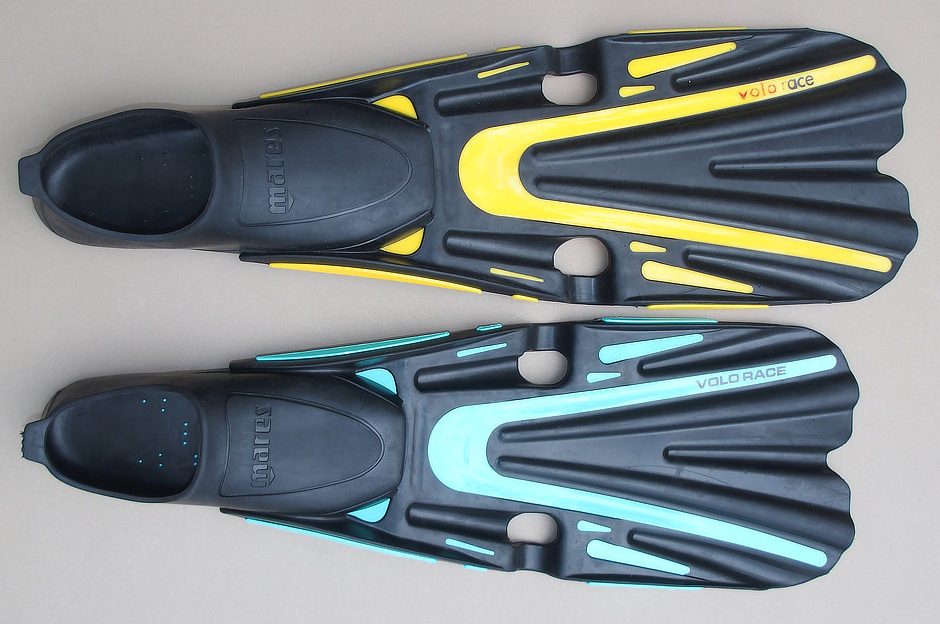
Galen and Nicole’s current fins are the Mares Volo Race full foot fin (on Amazon). Nicole also uses longer freediving fins. These are a higher end fin in terms of cost and build quality and materials and we really like them. The foot box is very comfortable, and made of thicker rubber than usual, and does not squeeze our feet like the Superchannel fins mentioned below.
They have a built-in sort of rubber hinge that really works, allowing the fin to flex to an ideal angle. They are rather long, at least in Galen’s size, but are not very stiff, so are not tremendously powerful, which makes them easy on the joints. But we both find that their power is good enough for diving down without a lot of kicking. Mares has made them for a long time. You have to take care of the tips though. Don’t rest the fins on them in storage, otherwise the plastic and rubber can come unglued.

Another very good option in full foot snorkeling fins, at a higher price than the Cressi Agua fins, is the Mares Avanti Superchannel Full Foot Fin (on Amazon). They have a very flexible center area with channels that mimics split fin motion to some extent. These have excellent propulsion, and are not too stiff. But the foot pocket is both narrow and short in depth, and the side rails on the fins are a harder plastic. So if you have wide or tall feet, or bunions, they might not work for you.
Galen had bad rub spots from the harder plastic areas and Nicole had issues with the depth of the foot pocket making them painful to get on and off. But we know of a few snorkelers who they really work for. The sizing was correct because we went by our EU sizes.


If you are looking for an affordable, and comfortable fin, the Sporti Floating Fins (on Amazon) are good. We used fins like them for years. They are all rubber, so the foot pocket is super comfy. They are not terribly long, so good in luggage. Propulsion is not bad, but definitely slower than the fins above, which could be an issue in strong currents. They also float, which is great.
There are many more full foot snorkeling fins available on Amazon.
Open Heel Snorkeling Fins – The Barefoot Type

Open heel snorkeling fins have a strap on the back that goes over your heel that keeps your foot in place, and the fins do not cover the entire sole of your foot. We have personally never found open heel fins to be as comfortable as full foot versions. But many people do.
Benefits of Open Heel Barefoot Fins
In addition to all the benefits of a full foot fin, these barefoot open heel fins are also shorter in the luggage because the heel strap can be tucked in.
Drawbacks of Open Heel Barefoot Fins
The barefoot versions of these have the same drawbacks as the full foot fins above, plus your foot is not fully covered, so your heel is exposed to rocks, urchins, and other potentially harmful things in the water.
Recommended Open Heel Snorkeling Fins – Barefoot Type
One of the most popular open heel snorkeling fins is the ScubaPro Go Travel Fin (on Amazon). It is a very high quality fin, made of durable Monprene material.

We have both tested this fin numerous times and it has pretty good propulsion for its size, and is not too stiff of a blade. After a long snorkel Galen had pain on the tops of his feet. And for Nicole the heel strap was constantly slipping off (Nicole is wearing them in the picture below).
But lots of traveling snorkelers swear by this fin because of its relatively short length in luggage. The Scubapro Go Travel Fin sizing chart was correct for Galen’s feet, but one size too big for Nicole. Note there is another version of this fin called the Scubapro Go Sport Fin that has a larger foot pocket to be worn with a boot.

There are many more open heel snorkeling fins available on Amazon.
Open Heel Fins – Worn With Boots
You can also buy open heel snorkeling fins that have a much larger foot pocket. They are designed to be worn with neoprene boots that usually have a hard sole. Many snorkelers choose this type of fin and shoe system.
Benefits
The big reason to choose this type of fin is for water entrances that are rocky or full of urchins. You can walk out in your boots and then just put your fins on over them once you can float. You don’t have to take the boots off and attach them to a belt.
The boots can also help when climbing boat ladders with small metal rungs. They help with traction and comfort of your bare feet on the skinny rungs.
Neoprene boots can also keep your feet warm while snorkeling in colder water.
Additionally, for some people with bunions, or other foot health issues, the boots can provide more padding and protection from blisters and rubbing.
Drawbacks
This type of fin has a much bigger foot pocket, which makes the fin bulkier and heavier, which is not great for luggage, or in the water. It means more water resistance when kicking, and more fatigue because of having to kick a larger and heavier fin; although many people don’t find that to be much of an issue.
The other drawback is that you need to find a combination of boots and snorkeling fins that work together for fit and sizing. And we have seen that some footwear that appears comfortable when walking, can have rubbing issues when snorkeling, because your foot angle is pointed when kicking.
Recommended Open Heel Fins – Worn With Boots
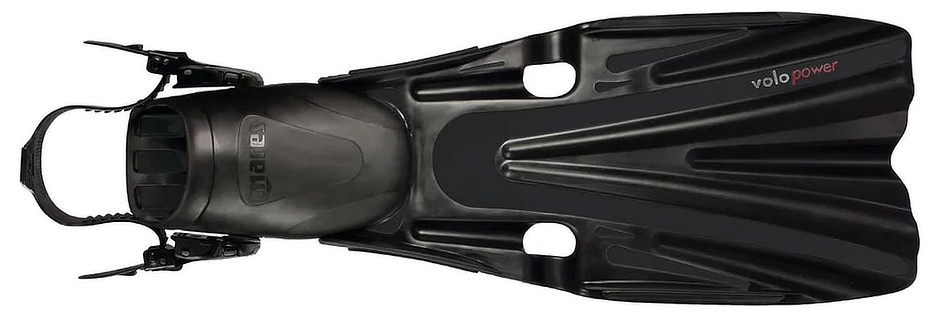
We don’t tend to test this type of fin often because of the drawbacks mentioned above. But if we did, we would probably start with the Mares Volo Power fins, because it has the same blade technology as our favorite Mares Volo Race full foot fins above.
ScubaPro used to make a full foot version of the Seawing Nova (on Amazon), and we really liked it. They also make a version of the Go Fin open heel, called the Go Sport (on Amazon). And if you are a big strong person who likes a stiff fin, they make the Seawing Nova Gorilla Fin (on Amazon), which is a stiffer version.
What About Short Travel Fins That Fit in a Carry-on?
If your primary reason for buying a short fin is luggage size and weight, please think again. Short travel fins, body boarding fins, and fitness swim fins seriously lack power in the water, which is important for safety in a current. Many people we have talked to who have used them have regretted it. If you are a very strong swimmer you may get away with it, but will likely need to kick hard and use your arms to keep up with other snorkelers in a strong current.
Some open heel snorkeling fins will fit in standard 22″ carry-on luggage, depending on your foot size. And one friend gets her full foot fins into a carry-on by rolling up the fin’s foot pocket (not possible with all fins). The Scubapro Go Travel Fin is a good short fin for travel, that still has good propulsion, as is the affordable and compact SEAC Zoom; both fins are fully reviewed above.
There are many more travel fins available on Amazon.
What About Long Freediving Fins?
Just like you don’t want a really short fin as a snorkeler, you probably will not want a really long fin like those used by freedivers to reach deep depths with the most efficiency.
But, there are some shorter length freediving fins that can be really good for snorkelers who like to freedive down to shallow depths to explore the reef more, and to take better pictures. Nicole now regularly uses a short freediving fin for just this reason.
We have written a page here about the differences between how a snorkeler freedives, as compared to the sport of freediving. The focus, equipment and risks are different.
And we now also have recommendations for short freediving fins for snorkelers, if you like to dive down.
Have You Seen These Guided Snorkel Travel Adventures?



Snorkeling Fins Sizing and Fitting Tips

Make sure they fit correctly. You want your snorkeling fins to be a bit snug, but not too tight. As your feet cool in the water they will shrink a little. So your fins will get looser in the water and slip more. So a little tighter fit is better than loose. You don’t want a loose heel cup or strap. Nothing is more irritating than snorkeling fins that slip off when you are trying to kick hard.
If you are going to use boots in your fins, get them first, and then try your fins with them. And make sure your boots are very comfortable and will not rub raw spots when you kick in them for an hour or more.
Pay attention to any areas where it feels like your snorkeling fins or footwear are pressing hard against bones or bunions, particularly if the fin has hard plastic sides. If you are in the store point your foot and mimic a kicking action. If the fin or boot pinches, or rubs hard on any areas of your feet, it will only get worse when you repeat that action hundreds and thousands of times in the water. Find a more comfortable combination.
Rub Marks and Blisters
Moderate red rub marks on your feet from your fins or footwear are fairly common when you have not been snorkeling recently. It may take a few days for your feet to get used to your fins and boots again. But blisters and open wounds are not OK. Open wounds are very uncomfortable, and a potential source of infection. Don’t let your feet get beat up. Travel with waterproof bandages, and toe tape, and be proactive in your foot care.
Fin Stiffness, Propulsion, Body Strength and Size
You might think that to get a lot of power and propulsion out of a fin it should be fairly stiff, so that you can push a lot of water. We have not found that to be the case. We like fins that are pretty flexible, and we go fast with them, without exerting ourselves very much.
But here is the thing. Neither of us are really big people, with huge leg muscles. For us, a stiff fin does not provide efficient propulsion because we have to work too hard to push it through the water. It’s like being in the wrong gear on your bike going uphill.
So we feel that the best propulsion comes from matching your physical strength and size with the correct fin stiffness. To really dial that in it helps to try different snorkeling fins in the water. You might be shocked how different they feel. The right fin makes all the difference in your top speed and comfort while snorkeling.
