
Updated – January 2026

Selecting the right snorkel can make all the difference to your comfort and fun. Snorkels are basically a tube you use to breathe through your mouth when you stuff your face in the water. How hard can it be to pick one? You’d be surprised.
There are a number of different types, with lots of different features, made out of various materials, with quality differences. Your mouth size and lung capacity also play a role in your snorkel decision. If you like to dive underwater that will also change what snorkel you use. We recently loaned a snorkel we were testing to a snorkeling guide friend, and the difference it made in her experience was in her words “a game changer”.
We can help you figure it out with this snorkel buying guide. We have used lots of different snorkels over the years, and continue to buy and test the newest models on nearly every trip. We have more snorkels laying around from testing than we care to admit.
Don’t go cheap on a snorkel. It is well worth your money to spend up a little. We have yet to find a really affordable snorkel that breathes well, or is not too big or heavy.
Note: Our suggestions come from hands-on experience. We hope you find them helpful. You can help us if you purchase from the links below. We may make a small commission, as an Amazon Associate or from other companies, at no extra cost to you.
Snorkel Buying Guide – Our Test Winners and What We Use
Below we share all our favorite snorkels of different types. Make sure and read farther down the page where we describe the different features on snorkels so you can make an informed purchase.
Best Semi-Dry Snorkel for Everyone – We Both Love It

If we had to pick one snorkel to buy, that we both love, and that would be good for most people, it would be the TUSA Platina Hyperdry II Snorkel (on Amazon).

We don’t normally both like the same snorkel, but we each have tested this one out a bunch, and it is excellent. The splash guard on top works really well, the purge valve is big and the snorkel clears very easily. The silicone mouthpiece is comfortable, there are a number of adjustments you can make to the angle and to the mask clip for comfort.
The shape of the purge valve area below the mouthpiece is as hydrodynamic of any we have found, meaning it moves easily through the water, as does the oval tube shape, causing no mouth fatigue over a long snorkel. The flex tube is made of a high quality silicone. The entire snorkel is lightweight, and the tube is made of a very flexible material. You can actually roll it up, short term, without hurting it.
It is well worth the money and should last many years. Because it does not have a dry valve you can dive down without the tongue pinching tube collapse problem we talk about below. This is the snorkel we loaned to a guide friend on one of our snorkeling trips, who also loved it.
Is it the best snorkel for everyone? No. If you are a big person with big lungs you might need a snorkel with a bigger mouthpiece and a larger diameter breathing tube. If you want the least water coming into your snorkel you would prefer the snorkel below. If you freedive a lot, there are some better options.
You can keep in the loop when we test new gear by signing up for our free newsletter here.
There are many more semi-dry snorkel options available on Amazon here.

Best Dry Snorkels

The TUSA Hyperdry Elite II (on Amazon) is similar to the snorkel above, but it has a dry valve top and a round tube. This is Nicole’s favorite snorkel, what she currently uses, and we think, the best dry snorkel to buy. She also used the previous version for many years. The dry valve works the best of any we have used. The valve top on this current version is smaller and lighter than the previous one. With Galen’s larger lung capacity he finds this snorkel a bit restrictive in air flow, and dry valves are not the best for freediving.

Nicole also likes Fourth Element’s Dry Snorkel. It has a comfortable mouthpiece, an effective and small-profile purge valve, and a dry top that functions well. The snorkel tube above the silicone flex tube is oblong in shape making it hydrodynamic when pushing it through the water.
They also offer this snorkel in plain white and black. If you are already buying a wetsuit or rash guard from Fourth Element, you can add on a snorkel and mask to your order.
There are many more dry snorkels available on Amazon here.
Galen’s Favorite Snorkel for Shallow Freediving


Because Galen freedives a lot he uses the Riffe Stable Snorkel (on Amazon). This is the best snorkel to buy for freediving. The splash guard works surprisingly well at keeping wave splashes out. (Note that Amazon calls this a dry snorkel, it is semi-dry. See the image of the top below.) And the hydrodynamic wing shape of the snorkel tube and splash guard are a little better underwater than the TUSA Platina Hyperdry II.
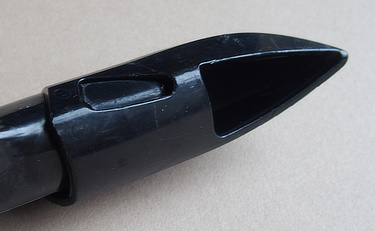
This snorkel has a huge purge valve and clears very easily. It is lightweight, and has a very simple and excellent mask strap clip. The mouthpiece was not perfect for Galen’s mouth and he cut away a little bit of the material. The mouthpiece is changeable for different sizes/types. Read the notes below about why Galen does not like using a dry top snorkel when diving (tongue pinching and tube collapse).
The Best Classic (J) Snorkel

This not our favorite type of snorkel, but we have tested a number of them. Currently we think the Mares Dual Snorkel (on Amazon) is the best classic snorkel to buy. It has a comfortable mouthpiece.
There are many more classic snorkel options available on Amazon here.
Easiest Breathing Snorkels for Big Lungs

Some snorkels breathe easy, some do not, and that may change from person to person based on their lung capacity and how they breathe. Galen finds Nicole’s favorite snorkel a bit restrictive in flow, probably because of his greater lung capacity.
A big person, with big lungs, might want to consider the Oceanic Ultra-Dry 2 (on Amazon) which has a dry top, or Atomic Aquatics SV2 (on Amazon) which has a splash guard. When we tested these snorkels, they each had aspects we did not like, but they all provided the best air flow of any snorkels we have tested. The Oceanic is physically large, produces more drag in the water than we like, and has a large mouthpiece. The Atomic Aquatics SV2 has an ineffective splash guard, does not clear very well, a mask strap attachment we don’t like, and it is expensive. Of the two we would buy the Oceanic Ultra-Dry 2.

Full Face Snorkel Mask
Another option to consider is the full face snorkel mask that combines the snorkel with the mask into one piece of equipment. To learn more about what brands are good and the pros and cons of them, read this page.
Before You Buy, Understand the Pros and Cons of Different Snorkel Features
You will often find snorkels grouped into three basic categories, classic or “J” snorkels, semi-dry snorkels, and dry snorkels. Those names refer to some specific features that each snorkel has, but you can get snorkels with just about any mix of features you might want. Below we explain the different options, and the pros and cons of each type.

Features of a Classic “J” Snorkel
A classic or “J” snorkel is normally just an open tube, with a mouthpiece and some type of mask strap attachment. Normally it is a tube that does not bend. On some of them the only adjustment you can make is rotating the mouthpiece to a different angle. A classic snorkel can be made out of plastic, all silicone, or a mix. Often the mouthpieces on classic snorkels are molded into the tube and not replaceable.
Flexible Tube

Many snorkels have a flexible section down low near the mouthpiece. This accordion-like section can make the snorkel more comfortable because it conforms to your mouth position better than a hard tube. And when you release the snorkel it moves away from your face. The tube also gives you two points of rotation, to adjust the angle of the top and mouthpiece separately.
We like snorkels with this feature, so long as they are made of high quality and very flexible silicone. If the flexible tube part is made of lower grade plastics, as some lower quality snorkels are, it can be very stiff and actually cause mouth fatigue. Those also tend to leak more around the joints.
One downside to the flexible tube is that when swimming underwater, the top of the snorkel can move around a lot, which can be annoying. Read below about tongue pinching pressure collapse of this tube when combined with a dry valve and diving.
Purge Valve at Bottom of Tube

We love purge valves on snorkels and consider them a great improvement over the classic non-purged snorkels. A purge valve is a flap of silicone that keeps water out, but when you get a bunch of water in your snorkel it drains out. It makes clearing a snorkel (blowing water out of it) much easier because the water mostly goes out the bottom, instead of having to shoot it all the way out the top.
Purge valves are often combined with a chamber for water to collect in that helps keep it from going in your mouth. But, if the purge chamber gets too large, it can cause mouth fatigue because it drags too much in the water. You may also hear folks say that purge valves are a potential source of failure. But in all of our years we have only once had a purge leak, and it was just a bit of sand that was easily cleaned out.
Splash Guard at Top of Tube (Semi-Dry Snorkel)

There are many different types of these, but essentially they just block waves and water from easily coming down the tube. Some work remarkably well. One of the most expensive snorkels that is supposed to have a great splash guard we found did not work at all (at left in the picture below). So long as it is designed well, and does not limit snorkel clearing, a splash guard is another excellent feature that can make a world of difference, particularly on wavy windy days. From our testing good splash guards are nearly as effective at keeping out water as dry valves, and when combined with good purge valves almost eliminate inhaling any water into your mouth.
Dry Valve at Top of Tube

Once again, there are many variations on this, but essentially they all have some sort of float at the top of the snorkel. When the snorkel is immersed accidentally or from diving, or when a wave comes over the snorkel, the float raises up closing a little silicone door, or on some a ball floats up, to seal the breathing hole in the snorkel.
Good ones effectively keep water out, even when diving underwater. Poorly designed ones don’t work well, and often get stuck in a closed position even when not underwater, making it so you can’t breathe, and forcing you to have to pull the snorkel out of your mouth.
Generally for people who only snorkel on the surface we recommend a good dry snorkel. We don’t recommend them for people who dive down (more about that below), when the valve is combined with a flexible tube section (they normally are). Even good quality versions of these can cause some people discomfort because they can’t breathe in when water closes the valve. It is disconcerting, even though breathing in a bunch of water might also not feel good.
Many dry snorkels we have tested perform poorly, in every price range. Getting that dry valve technology down so it works really well is not easy. For example, the dry valve on the ScubaPro Spectra Dry and Laguna 2 Dry snorkels regularly sticks closed (and not just on our sample). And some cheap dry snorkels make the breathing hole too small, restricting your breath too much.
Mask Strap Connection

Each company also has different ways of connecting the snorkel to the strap. Some just have an open clip, that slides over your strap. Some have a quick release system, making it easier to separate your mask and snorkel for travel. Some have adjustable positions for better ergonomics. Many are very poorly designed, and very difficult to attach. It is a feature to pay attention to.
Safety Concerns When Buying a Snorkel
Freediving and Tube Collapse
If your snorkel has a flexible tube and a dry valve on top, and you freedive down with the snorkel in your mouth, when you get to a certain depth the flexible tube will collapse suddenly from the water pressure. That compression sucks your tongue hard into the snorkel mouthpiece, pinching it. This can be a real shocker if you do not expect it, and is a safety hazard, not to mention being very uncomfortable.
For that reason Galen does not use a dry snorkel. For a quick dive he much prefers the snorkel to fill with water, and to clear it at the surface. For deeper dives he removes the snorkel from his mouth.
Children and Small People Using Adult Snorkels
If a small person or child uses an adult sized snorkel, they may not have the lung capacity to fully expel their breath and will then be re-breathing their exhaled gases, which will increase their difficulty breathing, and can be dangerous. So make sure to follow safety guidelines for children’s snorkels.
Hydrodynamics
As we mentioned above having a hydrodynamic snorkel is a good idea. The easier it goes through the water the better. If you don’t have a snorkel that is easy to push through the water, your mouth will start to get tired after snorkeling for an hour or more.
Be sure to avoid gimmick snorkel products that have a large surface area for this reason, like the ones that have two tubes, one for exhale, one for inhale, doubling the size of the tube surface area. Big snorkels also can cause more strain to your mouth when it is windy out.